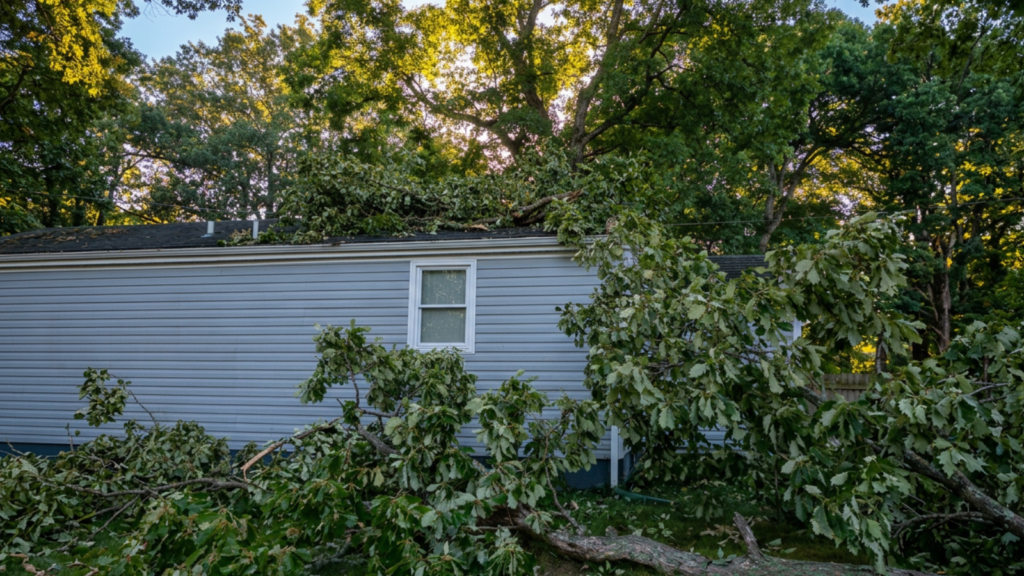
A storm rolls through, the wind howls, and then it happens: a crack, a thud, and suddenly there’s a tree lying across your roof. If you’re standing in your yard right now staring up at broken shingles and splintered branches, take a breath. You’re not the first homeowner in Hampton Roads to deal with this, and you won’t be the last. Tree damage roof Virginia Beach homeowners experience is more common than most people realize, especially with our humid summers, hurricane season, and older, mature trees lining so many neighborhoods across the city.
The good news is that what you do in the next few hours and days matters enormously, both for your safety and for how smoothly your insurance claim goes. At Reitzel Roofing and Exteriors, we’ve walked hundreds of local homeowners through exactly this situation, so let’s go through what to do, step by step, if you’re facing tree damage roof Virginia Beach weather has a habit of causing more often than people expect.
Why Tree Damage Roof Virginia Beach Situations Happen So Often
Virginia Beach sits right in the path of Atlantic hurricanes, nor’easters, and the kind of sudden summer thunderstorms that can snap decades-old oaks and pines in a matter of seconds. Combine that with mature tree canopies in neighborhoods like Kempsville, Great Neck, and Alanton, and you’ve got a recipe for exactly the kind of tree damage roof Virginia Beach homeowners call us about after nearly every major storm.
It’s not just hurricanes, either. Saturated soil from heavy rain weakens root systems, and even a moderately strong gust can be enough to bring down a tree that’s stood for fifty years without issue. Understanding why this happens is the first step. Knowing what to do when it happens to you is the part that actually protects your home.
Step 1: Make Sure Everyone Is Safe First
Before anything else, before photos, before phone calls, get people and pets away from the area. A tree resting on your roof can shift unexpectedly, especially if it’s still raining or windy. If you see downed power lines anywhere near the tree, stay far away and call your utility company immediately. This isn’t the moment to inspect the damage up close.
If the tree has punched through your roof or ceiling, evacuate that part of the house and keep everyone in a different room until a professional can assess the structural situation. Tree damage roof Virginia Beach homeowners deal with can range from a few scraped shingles to a full structural breach, and you won’t know which one you’re dealing with until it’s been properly inspected.
Step 2: Document Everything Before You Touch Anything
Once everyone is safe, grab your phone and start taking photos and video, from multiple angles, before anything gets moved or cleaned up. This documentation becomes critical during the insurance claims process, so don’t skip it, even if it feels like the last thing on your mind in the moment.
Capture the tree itself, the section of roof it landed on, any visible interior damage like water stains or ceiling cracks, and the surrounding yard. If you can safely get a wider shot showing the whole scene, even better. Insurance adjusters handling tree damage roof Virginia Beach claims rely heavily on early photo documentation, and homeowners who have it tend to move through the claims process considerably faster than those who don’t.
Step 3: Call a Professional for Emergency Tarping
Here’s where timing really matters. Every hour your roof sits open to the elements is another hour water can seep into your attic, insulation, and drywall, turning a roof problem into a much bigger, much more expensive interior problem. A professional roofing company can install an emergency tarp to stop the bleeding while a full assessment and repair plan comes together.
This is exactly the kind of situation Reitzel Roofing and Exteriors handles regularly. We understand that tree damage roof Virginia Beach homeowners face doesn’t wait for convenient business hours, which is why fast response matters so much in the first 24 to 48 hours after a storm.
Step 4: Contact Your Insurance Company
Most homeowners insurance policies cover tree damage, particularly when the tree fell due to a storm, wind, or other covered peril rather than neglect. Call your insurance company as soon as it’s safe to do so, and be ready to provide the photos and documentation you gathered in step two.
Ask your adjuster directly what your policy covers, including whether tree removal is included alongside roof repair costs. Some policies cap tree removal costs separately from structural repair, so it’s worth clarifying this upfront rather than being surprised later. Filing quickly after tree damage roof Virginia Beach incidents also tends to speed up the overall claims timeline, since adjusters are often juggling a surge of claims after a major regional storm.
Step 5: Get a Professional Roof Inspection
Even if the visible damage looks minor, a full inspection matters. Impact from falling branches can crack shingles, dislodge flashing, or damage the roof deck underneath in ways that aren’t obvious from the ground or even from inside your attic. A thorough inspection catches these hidden issues before they turn into leaks months down the road.
At Reitzel Roofing and Exteriors, our inspection process for tree damage roof Virginia Beach properties includes checking the roof deck for cracks or soft spots, examining flashing around chimneys and vents near the impact zone, assessing gutter and downspout damage, and confirming there’s no hidden puncture that could let water in during the next rain.
Table: Tree Damage Severity and What It Usually Means
Not every fallen branch requires the same response. Here’s a general breakdown to help you understand what you might be dealing with while you wait for a professional assessment.
| Damage Level | What You’ll Typically See | Recommended Next Step |
| Minor | A few scratched or missing shingles, small dents, no visible holes | Schedule a standard inspection within a week |
| Moderate | Cracked shingles, bent flashing, minor sagging in a small section | Get an inspection within 24-48 hours; tarp if rain is expected |
| Significant | Large branch or tree limb resting on the roof, visible dents or breaks | Call for emergency tarping and inspection same day |
| Severe | Tree trunk on the roof, visible hole, or ceiling damage inside the home | Evacuate the affected area, call emergency services if needed, then a roofing contractor immediately |
| Structural | Roof sagging, beams visibly compromised, interior collapse risk | Do not enter the area; contact emergency services and a structural engineer before any roofing work begins |
This table is meant as a general guide, not a replacement for a professional assessment. Tree damage roof Virginia Beach situations can look worse or better than they actually are from the ground, which is exactly why an in-person inspection matters so much before you decide on next steps.
Step 6: Understand Repair Versus Replacement
Once the inspection is complete, you’ll typically be looking at one of two paths: a targeted repair or a full roof replacement. Smaller impact areas, especially on a roof that’s otherwise in good condition, are usually repairable. A contractor removes the damaged section, checks the deck underneath, and replaces shingles, underlayment, and flashing as needed in that specific area.
Age plays a bigger role in this decision than most homeowners expect. A roof that’s five years old with a single damaged section is almost always worth repairing. A roof that’s already seventeen or eighteen years old, nearing the end of its expected lifespan, might make more financial sense to replace entirely, especially if insurance is already covering a meaningful share of the cost tied to the tree incident itself. It’s a conversation worth having honestly with your contractor rather than defaulting to whichever option sounds simpler in the moment.
Larger structural damage, or damage to a roof that was already aging or in poor condition before the tree fell, often makes more sense to address with a full replacement, especially if your insurance is already covering a significant portion of the cost. A reputable contractor won’t push you toward the more expensive option unnecessarily. At Reitzel Roofing and Exteriors, we walk every homeowner dealing with tree damage roof Virginia Beach storms have caused through both options honestly, including the pros, cons, and cost differences of each.
What to Expect During the Repair Process
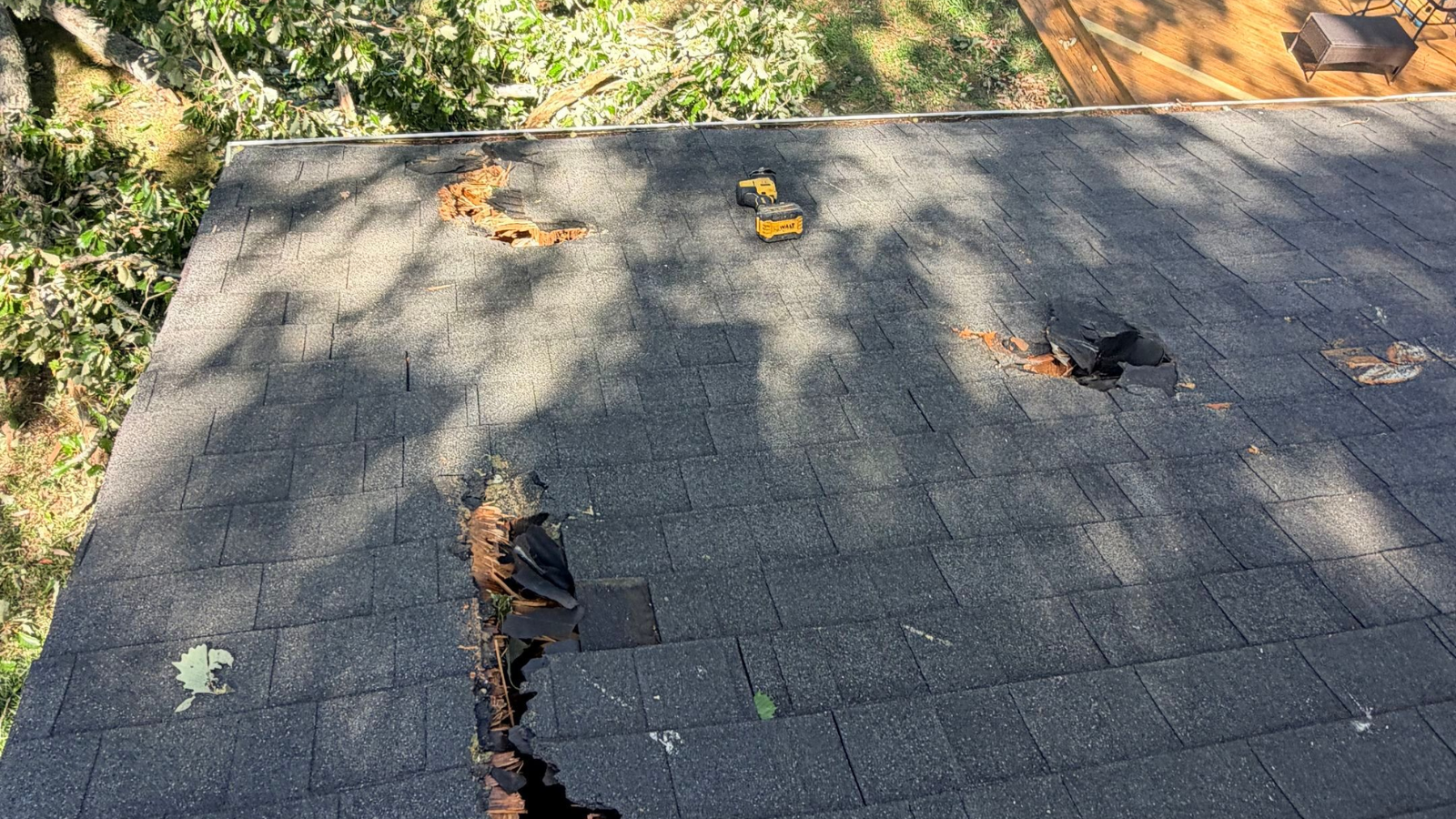
Once you’ve settled on a plan with your insurance company and contractor, the actual repair timeline depends on the extent of the damage. A minor repair might take a single day. A more involved structural repair, especially one requiring deck replacement or interior drywall work, can take several days to a couple of weeks.
Throughout the process, a good contractor keeps you updated, explains what they’re finding as they open up the damaged area, and flags anything unexpected, like hidden water damage from a slow leak that predates the tree incident itself, before moving forward with additional work.
Preventing Future Tree Damage Roof Virginia Beach Storms Might Cause
While you can’t control the weather, there are steps that meaningfully reduce your risk of dealing with tree damage roof Virginia Beach homeowners commonly report after every major storm season.
Regular tree trimming matters more than most people realize. Overhanging limbs near your roofline should be trimmed back, especially before hurricane season ramps up between June and November. If you have large, mature trees close to your house, having an arborist assess their health periodically can catch disease or root issues before they become a falling hazard.
Roof maintenance plays a role too. A roof that’s already in good condition, with solid decking and properly secured shingles, tends to fare better against impact than one that was already weakened by age or prior storm damage. Annual roof inspections, particularly before and after hurricane season, catch small issues before they become the kind of vulnerability that turns a moderate storm into a major repair.
Typical Cost Ranges to Expect
Every situation is different, but having a rough sense of cost ranges helps you know what’s reasonable when reviewing an insurance settlement or contractor estimate. Minor repairs, like a small section of replaced shingles and flashing, often fall in the range of a few hundred to around fifteen hundred dollars, depending on material and accessibility. Moderate repairs involving a larger section of roof, some deck replacement, and gutter repair typically run higher, often into the several-thousand-dollar range.
Severe damage requiring extensive deck replacement, structural repair, and interior drywall or insulation work can climb significantly higher, sometimes into five figures, particularly if the tree caused a full puncture or if mold remediation becomes necessary due to prolonged water exposure. Tree removal itself is usually billed separately from roofing repair, and costs vary widely based on the size of the tree and how difficult it is to access and remove safely.
These figures are general ranges, not quotes. The only way to know your actual cost is through a professional, in-person inspection, which is exactly why we always recommend getting a written estimate before agreeing to any insurance settlement figure.
A Quick Checklist for Choosing the Right Contractor
With so many roofing companies advertising storm response services, especially in the days right after a major weather event, it helps to have a short checklist in mind. Confirm the company is licensed and insured in Virginia, and ask to see proof rather than just taking their word for it. Check for a physical local address and a track record of reviews specific to this area, not just a generic national footprint. Ask whether the same team handles both the emergency tarping and the permanent repair, since continuity often means fewer miscommunications along the way. And get every estimate in writing before signing anything, including a clear breakdown of labor, material, and any additional costs tied to deck repair or structural work.
Taking a few extra minutes on this step, even when you’re stressed and eager to get your roof fixed, protects you from the kind of rushed decisions that tend to cause regret later.
Not every roofing contractor understands the specific rhythms of storm season in Hampton Roads, or how local insurance adjusters typically handle claims in this region. Working with a contractor who’s based here, who has handled tree damage roof Virginia Beach claims across neighborhoods from Kempsville to Sandbridge, means you’re getting advice shaped by real local experience rather than generic guidance that doesn’t account for our climate, our building codes, or our insurance landscape.
Reitzel Roofing and Exteriors has spent years working directly with Virginia Beach homeowners through exactly these situations, from the immediate emergency tarping call to the final shingle nailed into place. We know what adjusters in this area typically look for, what documentation speeds up a claim, and how to make sure nothing gets missed during the inspection process.
Insurance Claim Tips Specific to Tree Damage
A few extra details can make a real difference in how smoothly your claim goes. Keep a written log of every phone call with your insurance company, including dates, names, and what was discussed. Don’t sign any settlement offer until you’ve had a professional roofing contractor confirm the estimated repair cost is realistic and complete. And don’t rush to have the tree fully removed before your adjuster has had a chance to see the damage in person, unless it’s posing an active safety hazard.
These small steps protect you from being underpaid on a claim involving tree damage roof Virginia Beach insurance companies are handling in large volumes after a widespread storm, when adjusters are stretched thin and details can slip through the cracks if you’re not tracking them yourself.
What Homeowners Often Get Wrong
A few mistakes come up again and again. Some homeowners wait too long to call a contractor, assuming the damage looks minor enough to ignore, only to discover weeks later that water has been quietly working its way into the attic. Others accept the first insurance settlement offer without getting an independent contractor estimate, which can leave real money on the table if the initial assessment missed something.
Another common mistake is hiring the first available contractor without checking licensing, insurance, or local reviews, especially in the chaotic days after a major storm when out-of-town crews sometimes show up looking for quick work. Taking even fifteen extra minutes to verify a contractor’s credentials can save you from a much bigger headache later.
Final Thoughts: Handling Tree Damage Roof Virginia Beach Storms Cause With Confidence
Dealing with a tree on your roof is stressful, but it doesn’t have to be chaotic. Knowing the right steps, prioritizing safety, documenting everything, getting emergency tarping in place, filing your claim promptly, and bringing in a trusted local contractor, turns an overwhelming situation into a manageable process with a clear path forward.
FAQs
1: Does homeowners insurance cover tree damage to my roof?
A: In most cases, yes, particularly when the tree fell due to a storm, high winds, or another covered weather event rather than neglect or a pre-existing dead tree you failed to remove. Coverage details vary by policy, so it’s worth calling your provider directly to confirm your specific coverage limits, including whether tree removal is bundled with roof repair coverage or billed separately.
2: How quickly should I call a roofing contractor after a tree falls?
A: As soon as it’s safe to do so, ideally within the first few hours. Fast action matters because an open roof exposes your home’s interior to ongoing water damage every hour it’s left uncovered. Emergency tarping services exist specifically for this reason, and a same-day response can be the difference between a straightforward repair and a much more expensive interior remediation project.
3: Can I remove the tree myself before the insurance adjuster sees it?
A: It’s generally best to wait until your adjuster has documented the damage, unless the tree poses an immediate safety hazard like blocking an exit or resting on active power lines. If you must remove it before an adjuster visit, take extensive photos and video first, from every angle, so there’s a clear record of the original damage for your claim.
4: How long does a typical tree damage roof repair take?
A: Minor repairs, like replacing a small section of shingles, can often be completed in a single day. More extensive damage involving deck replacement, structural repair, or interior drywall work can take anywhere from several days to a couple of weeks, depending on the scope and material availability.
5: What if the tree that fell wasn’t on my property?
A: This can get complicated, but generally, your own homeowners insurance still covers the damage to your roof regardless of whose tree caused it, under most standard policies. Your insurance company may separately pursue the neighboring property owner’s insurance to recover costs, but that process typically happens between the insurance companies rather than directly involving you.