Walk your property line on a Saturday morning and really look at your fence, not the quick glance you give it on your way to the car. Is it standing straight, or does one section lean just a little more than it used to? That small tilt, that one board that wiggles when you push it, is usually the first sign that fence repair Virginia Beach homeowners eventually need is closer than they think.
At Reitzel Roofing and Exteriors, fences aren’t always the first thing people call us about, but once we’re on a property for a roof or siding job, it’s common to notice a fence quietly falling apart in the background. A leaning post, a gate that scrapes the ground, boards gone gray and soft, these are the early warnings most homeowners walk past for months before finally addressing them. Left alone, those small warnings have a way of compounding, turning a simple weekend fix into a far bigger project once rot or storm damage really sets in. This guide covers exactly what fence repair Virginia Beach conditions make necessary, how to tell repair from replacement, and what to expect either way.
Why Fence Repair Virginia Beach Properties Need Comes Up So Often
Fences here work harder than fences in a lot of the country. Based on data compiled by Chesterfield Fencing & More, a Virginia-focused fencing resource, wood fences in this state typically last between 15 and 20 years, with humidity, rainfall, and temperature swings cited as the leading causes of early decay and warping. That’s a noticeably shorter window than a fence might get in a drier, more temperate climate.
Add in Hampton Roads’ sandy soil, salt air near the oceanfront, and a hurricane season that runs from June through November, and it’s easy to see why fence repair Virginia Beach homeowners schedule tends to follow a predictable pattern: posts loosen in soggy soil, hardware rusts faster near the coast, and high winds test every panel at least once a year.
The Big Three: Leaning, Worn, and Loose
The title of this guide isn’t accidental. Almost every fence problem we see falls into one of these three categories, and each points to a different underlying cause.
Leaning
A leaning fence almost always starts at the post. Wood posts set in soil that stays wet for long stretches can rot below the surface, long before any damage is visible above ground. Metal posts can bend from impact or lean if their concrete footing has cracked or shifted. A section that leans more after heavy rain is a strong clue that the post footing has been compromised.
Worn
Worn describes the slow stuff: graying wood, cracked and splitting boards, peeling paint or stain, and a general tired look. Worn doesn’t always mean failing, but it does mean the protective layer, paint, stain, or galvanization has broken down, and the material underneath is now exposed to the elements.
Loose
Loose boards, rattling panels, or a gate that no longer latches cleanly usually trace back to hardware. Nails back out as wood expands and contracts with humidity, screws strip in softened wood, and hinges stretch under the weight of a sagging gate. Loose components are often the easiest and cheapest fix, if they’re caught early.
Any one of these on its own might be a simple repair. Several at once across the same fence usually signals that broader fence repair Virginia Beach weather has accelerated is overdue.
Table: Common Fence Problems and What They Usually Mean
| Symptom | Likely Cause | Repair Complexity | Urgency |
| One or two posts leaning | Rotted base or shifted footing | Moderate, post reset or replacement | Address within weeks |
| Entire fence line leaning | Widespread footing failure or storm damage | High, may require rebuild | Address promptly |
| Gray, cracked, or splitting boards | UV exposure, lost protective coating | Low to moderate | Monitor, plan refinishing |
| Loose or missing boards | Worn fasteners, wood movement | Low | Address soon to prevent further loss |
| Rust streaks on metal fencing | Coating failure, salt air exposure | Low to moderate | Address before structural rust sets in |
| Gate sags or won’t latch | Worn hinges, settled post | Low | Fix promptly, safety and security issue |
| Soft or spongy wood at the base | Rot from prolonged ground contact | High, often requires replacement | Address immediately |
This table is a general guide. The exact scope of fence repair Virginia Beach contractors recommend will depend on your fence’s material, age, and how long a given problem has been developing.
How Different Fence Materials Hold Up Locally
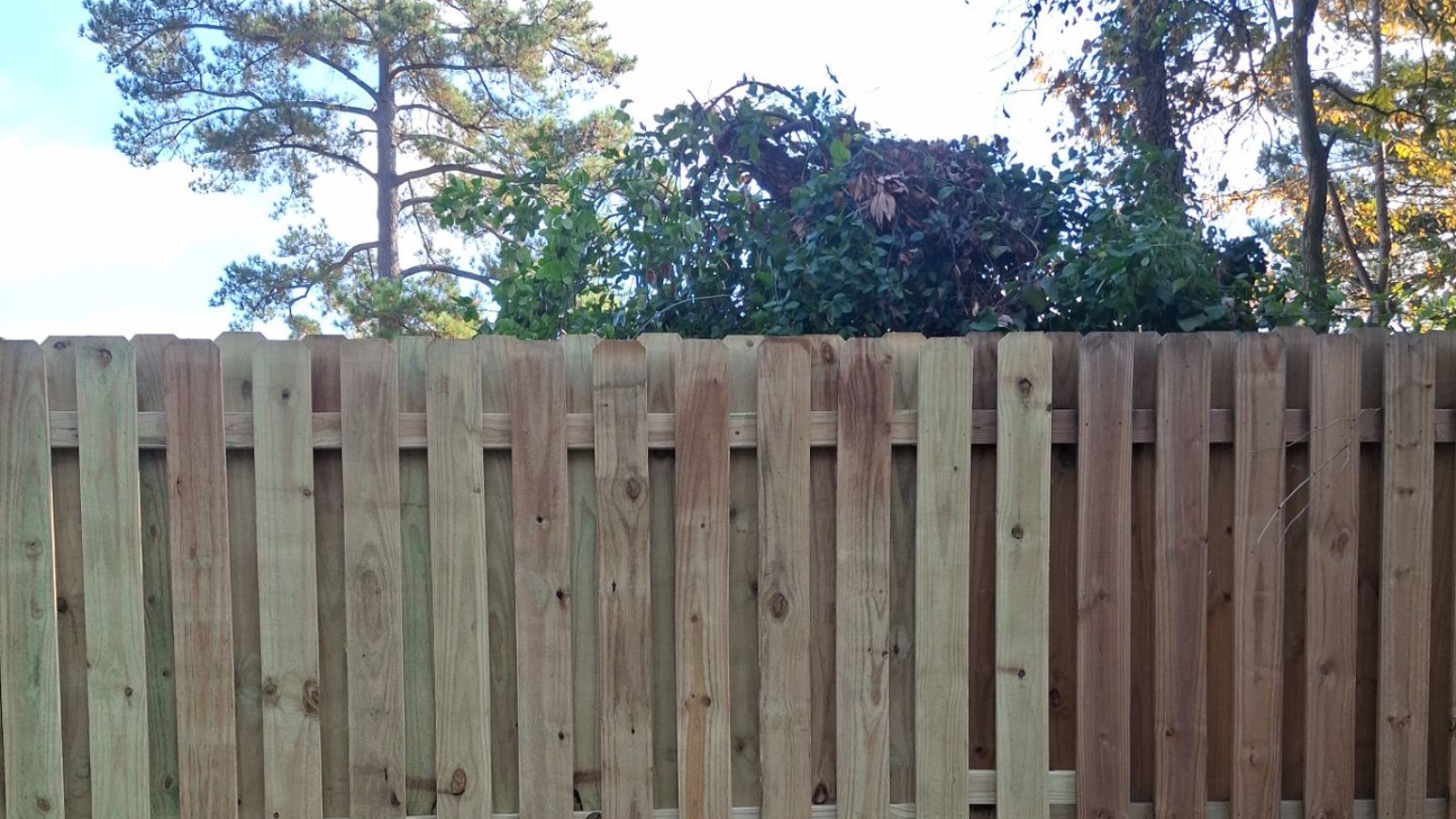
Material matters enormously here. Wood is popular for its classic look, but it’s the most vulnerable to our humidity, requiring regular sealing and inspection to avoid rot. Vinyl resists moisture and rot well and needs little maintenance, though it can become brittle and crack under a hard impact, particularly in colder snaps. Aluminum holds up nicely against rust compared to other metals and is a common, low-maintenance choice for pool enclosures and decorative fencing. Chain link is durable and inexpensive but prone to rust streaks and bent fabric after storms if the coating wears through.
Whatever you have, understanding how your specific material typically fails helps you recognize fence repair Virginia Beach needs earlier, before a small issue becomes a full section replacement.
Storm Season and Your Fence
Hurricane season puts real stress on fencing, and it doesn’t always take a named storm to do damage. Sustained wind pressure against a solid panel fence, like privacy fencing with little airflow between boards, can loosen posts and bend panels even in a strong but otherwise unremarkable storm. Flying debris can crack boards or dent metal fencing, and heavy rain saturates the soil around posts, weakening their grip.
After any significant storm, it’s worth walking the fence line to check for leaning posts, loose panels, or debris damage. Catching storm-related fence repair Virginia Beach needs early, before the next round of wind and rain, prevents a moderate problem from becoming a full section collapse.
Do You Need a Permit to Repair or Replace Your Fence?
This catches a lot of homeowners off guard. According to the City of Virginia Beach’s Planning Department, a permit is required for the construction, reconstruction, replacement, or relocation of a fence located within thirty feet of a public right-of-way, with some exceptions for agricultural zoning. Fences near the right-of-way line also have opacity limits, generally no more than 50 percent solid, and the current permit fee is $61.
If your project is a straightforward repair, replacing a few boards or resetting a post, you typically won’t need a permit. But if you’re planning to replace a significant section or rebuild the fence along a front or side property line, it’s worth checking with the city first. Factoring permit requirements into your fence repair Virginia Beach project early avoids delays and potential fines down the road.
Repair or Replace? How to Decide
This is the question that matters most once you’ve spotted a problem. A few leaning posts in an otherwise solid fence are usually worth repairing, since resetting or replacing individual posts is far less expensive than a full rebuild. Isolated rot or board damage, especially on a fence under ten years old, is also typically a good repair candidate.
Full replacement starts to make more sense when the fence is approaching or past its expected lifespan, when leaning or rot has spread across multiple sections, or when repeated repairs have already been made and the underlying structure keeps failing. A fence that’s been patched three times in five years is usually telling you something the patches can’t fix.
What a Professional Fence Inspection Looks For
When we’re asked to assess a fence, we’re checking more than what’s visible from the yard. That includes testing posts for movement at the base, checking below the soil line on a sample post or two for rot, inspecting hardware for rust or wear, and looking at how water drains around the fence line, since standing water is one of the fastest ways to shorten a fence’s life.
We also look at the overall lean and alignment of the fence as a whole, not just the section someone called about, since a problem in one area often points to a condition affecting the whole property line. This kind of thorough look is what separates a true assessment from a quick guess, and it’s part of why professional fence repair Virginia Beach homeowners trust tends to hold up better over time than a rushed patch job.
Maintenance That Extends Fence Life
A little regular care goes a long way here. Reapplying stain or sealant to wood fencing every two to three years protects against moisture and UV damage. Keeping grass, mulch, and landscaping pulled back from the base of posts improves airflow and reduces rot risk. Tightening hardware once or twice a year catches loose boards before they fall off entirely, and rinsing metal fencing periodically helps remove salt residue in areas closer to the coast.
A short walk-around after every major storm, checking for leaning sections, loose boards, or damage, is one of the simplest habits that keeps small issues from becoming larger fence repair Virginia Beach projects down the line.
It also helps to think seasonally. Spring is a good time to check for winter damage and re-stain wood before the humid months arrive. Late summer, right before hurricane season peaks, is worth a quick hardware check, tightening hinges, latches, and any loose fasteners. And fall, once leaves have dropped, is a natural time to clear debris that’s built up against the base of the fence, since trapped leaves and moisture are a quiet but steady contributor to rot.
HOA Rules and Neighborhood Considerations
Many Virginia Beach neighborhoods, especially newer developments, have a homeowners association with its own rules about fence height, material, and even color, layered on top of whatever the city requires. Before starting a repair that changes the fence’s appearance, like swapping damaged wood boards for a different material, it’s worth checking your HOA guidelines or reaching out to your community’s architectural review committee.
This matters more than people expect. An otherwise perfectly good repair can trigger a violation notice if it doesn’t match the approved style for your community. Folding this check into your fence repair Virginia Beach project planning, right alongside any city permit requirements, saves you from redoing work you just paid for.
Shared Fences and Property Line Etiquette
A fence that sits directly on a shared property line raises its own questions, especially when only one side needs repair. In many cases, both neighbors share some responsibility for a boundary fence, though the specifics often come down to the original agreement, if one exists, or simply a friendly conversation. Before starting work on a shared fence, it’s worth talking to your neighbor about the plan, the cost split, and the timeline.
A quick, clear conversation upfront avoids the awkwardness of one household quietly repairing or replacing a shared structure without the other’s input. Most fence repair Virginia Beach projects along a boundary line go smoothly when both sides are simply kept in the loop from the start.
What This Means If You’re Buying a Home
If you’re house hunting, don’t let a nice-looking fence from the street fool you. Walk the full property line, push gently on a few posts to check for give, and look closely at board bases and the bottom rail, where rot tends to start first. Ask the seller how old the fence is and whether any sections have been repaired or replaced.
A fence nearing the end of its typical lifespan, or one with visible leaning and rot, is a cost worth factoring into your offer or negotiating directly. Understanding what fence repair Virginia Beach homes commonly need helps you walk into a purchase with realistic expectations rather than an unpleasant surprise a year or two after closing.
What Fence Repairs Typically Cost
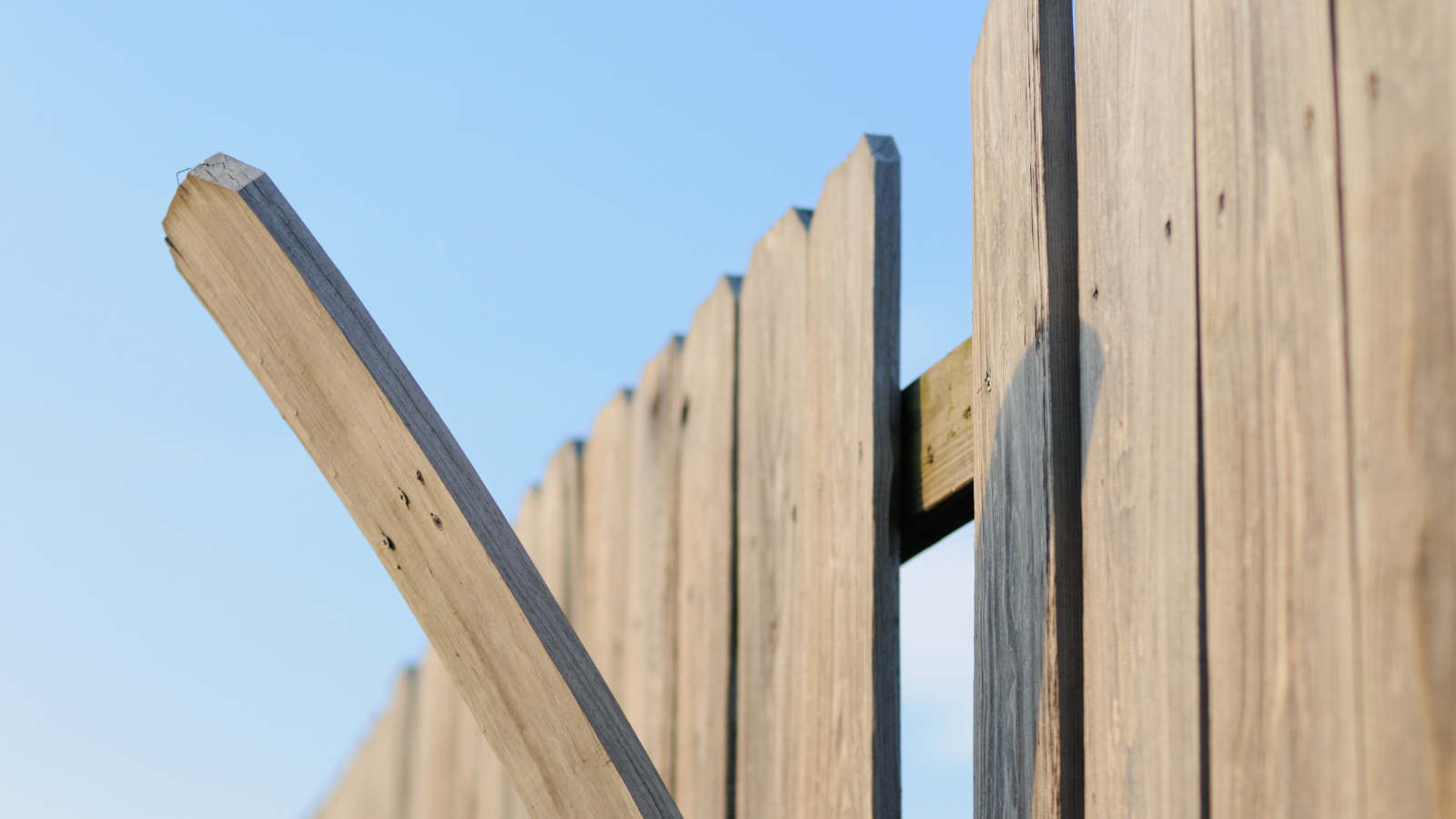
Costs vary by material and scope, but it helps to have a general sense of where things land. Resetting a single leaning post is usually one of the more affordable repairs, while replacing a handful of damaged boards falls in a similar modest range. Larger jobs, like resetting multiple posts after a storm or rebuilding a damaged section, cost more but are still typically far less than a full fence replacement.
Full replacement represents the biggest investment, but for a fence that’s already near the end of its life or has suffered widespread damage, it often makes more financial sense than continuing to patch a failing structure. Getting a written estimate after an inspection is the most reliable way to understand what fence repair Virginia Beach work will actually cost for your specific situation.
Final Thoughts on Fence Repair in Virginia Beach
A fence rarely fails all at once. It leans a little more each season, a board loosens here, a hinge wears there, until one day the whole thing looks like it needs more help than a quick fix can offer. Paying attention to the early signs, and understanding what fence repair Virginia Beach homes typically need and why, is the simplest way to keep a small problem from turning into a full rebuild.
The homeowners who get the most out of their fence aren’t necessarily the ones who spent the most on it. They’re the ones who walk the property line a couple of times a year, notice the small stuff early, and act on it before the next storm or the next humid summer makes it worse. That habit costs nothing but a few minutes, and it’s the single best way to stretch a fence’s life closer to the upper end of what it’s capable of in our climate.
FAQS
1: How do I know if my fence needs a repair or a full replacement?
A: A good rule of thumb is to look at how widespread the problem is and how old the fence is. A couple of leaning posts or a few damaged boards on an otherwise sound, younger fence usually points to a targeted repair. If leaning, rot, or damage shows up across multiple sections, or the fence is already near the end of its typical fifteen to twenty year lifespan, replacement often becomes the more cost-effective long-term choice.
2: Do I need a permit to repair my fence in Virginia Beach?
A: Simple repairs, like replacing a few boards or resetting an isolated post, typically don’t require a permit. However, if you’re rebuilding a significant section or replacing a fence located within thirty feet of a public right-of-way, the City of Virginia Beach generally requires a permit, along with compliance with height and opacity rules near that boundary. It’s worth a quick call to the Planning Department before starting larger work.
3: Why does my fence keep leaning even after I’ve had it fixed?
A: Repeated leaning, even after repair, often points to a drainage or soil issue rather than the post itself. If water consistently pools or saturates the soil around your fence line, posts will continue to loosen no matter how many times they’re reset. Addressing the underlying drainage, through grading or a different footing approach, is usually necessary to solve the problem for good.
4: How long should a new fence last in Virginia Beach’s climate?
A: Most wood fences in this region last between fifteen and twenty years with reasonable maintenance, though homes closer to the coast or in consistently damp, shaded areas may see a shorter lifespan without extra care. Vinyl and aluminum fencing generally last longer with less maintenance, making them worth considering if you want to minimize future repair needs.
5: Can I repair fence damage myself, or should I hire a professional?
A: Minor fixes, like tightening a loose board or replacing a single picket, are reasonable DIY projects for a handy homeowner with basic tools. Resetting posts, addressing rot, or working on fencing near a property line with permit implications is generally better left to a professional, both for structural reasons and to make sure any required permits and code requirements are handled correctly. A professional can also spot related issues, like early rot on a neighboring post, that an untrained eye might miss entirely.