A new roof can look flawless from the street and still be hiding mistakes underneath. The shingles may be straight, the color may look great, and there may not be a single stain on the ceiling. Yet one shortcut with nails, flashing, underlayment, valleys, or roof decking can stay quiet until the next stretch of wind-driven rain.
For homeowners thinking about shingle installation Virginia Beach weather makes those details especially important. Coastal wind, heavy rain, summer heat, humidity, and seasonal storms keep testing a roof long after the crew leaves. A mistake that seems small on installation day can eventually become lifted shingles, recurring leaks, damaged decking, or interior repairs.
A Good Shingle Still Needs Good Installation
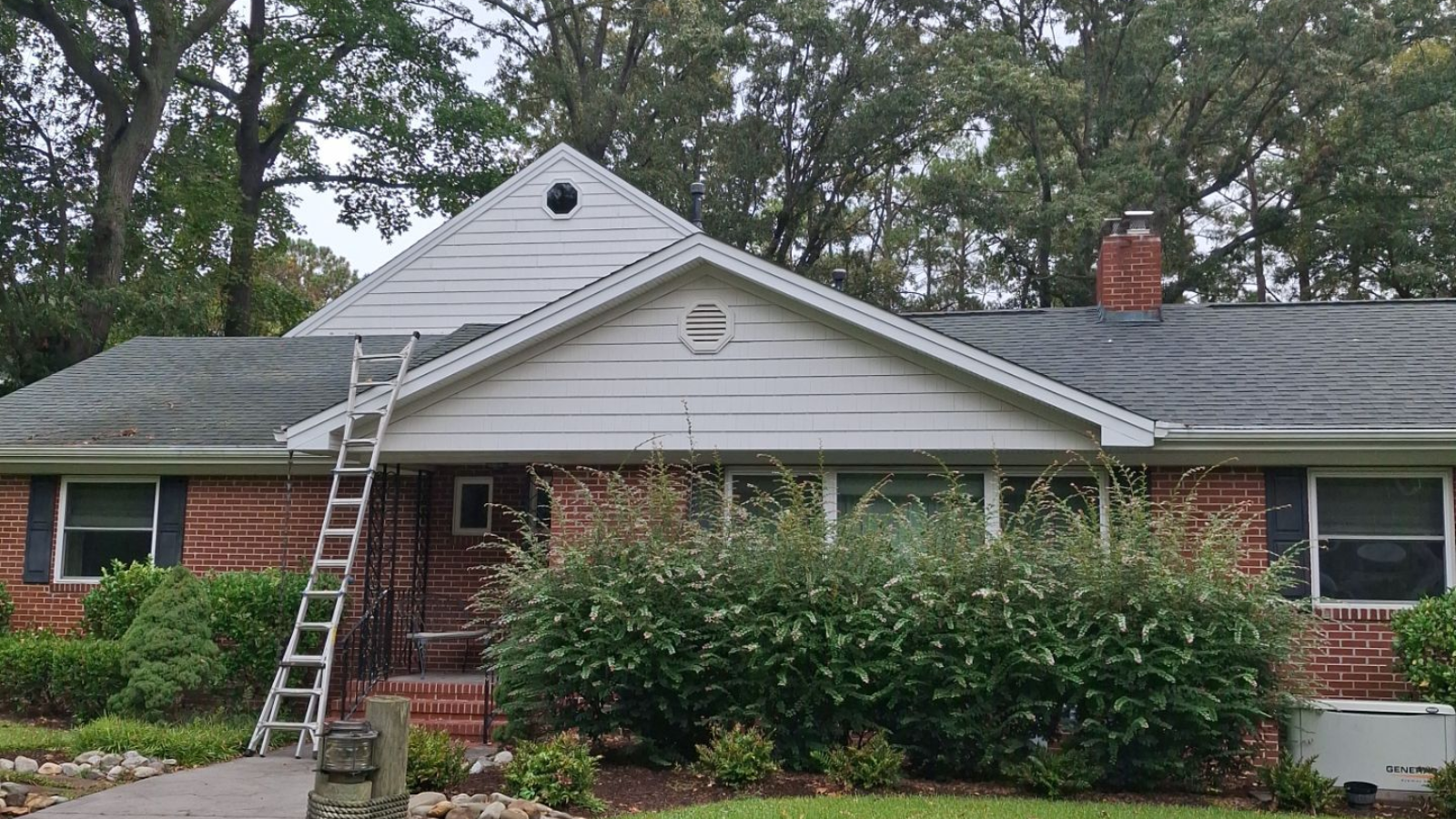
Homeowners naturally compare shingle brands, colors, warranties, and prices. Those decisions matter, but even a premium asphalt shingle cannot compensate for careless installation.
A complete roof includes the deck, underlayment, starter course, fasteners, drip edge, flashing, valleys, vents, penetrations, and ridge materials. Every layer has a job.
The current 2021 Virginia Construction Code says roof coverings must be applied according to applicable code provisions and the manufacturer’s installation instructions. Its asphalt-shingle provisions specifically address decking, underlayment, fasteners, attachment, flashing, valleys, and roof slope.
For shingle installation Virginia Beach homeowners can rely on, that is the real standard: the roof should not only look finished. The hidden layers and installation details need to make sense too.
Mistake #1: Putting Roofing Nails in the Wrong Place
Roofing nails are small, but placement matters. Manufacturers specify fastening zones for their shingles. Nails driven too high may not secure the intended overlapping layers, while nails placed too low can interfere with the shingle below or end up too close to exposed areas.
The problem is that the fasteners disappear once the next course goes on.
Homeowners may not realize anything is wrong until shingles begin lifting, slipping, or reacting poorly to wind. With shingle installation Virginia Beach roofs receive, following the product’s fastening instructions is not a minor technicality. It is part of helping the roof perform as designed.
Mistake #2: Overdriving or Underdriving the Fasteners
Correct location is only half the job. Nail depth matters too.
An overdriven nail can cut too deeply into the shingle. An underdriven fastener may remain raised enough to prevent the next course from lying correctly. Pneumatic nail guns help crews work efficiently, but pressure and technique still need to be controlled.
If a fairly new roof develops raised areas, loose shingles, or sections that do not lie flat, fastening quality is one of several conditions worth checking. It does not automatically prove poor workmanship, but it is a good reason to investigate before repeated weather exposure makes the problem worse.
Mistake #3: Using Too Few Fasteners
Fastener quantity is another detail homeowners rarely see after installation.
Virginia’s code requires asphalt shingles to have at least the number of fasteners specified by the manufacturer and establishes minimum attachment requirements. That means the fastening pattern should match the product rather than being based on guesswork.
For shingle installation Virginia Beach wind can expose a weak fastening pattern quickly. If one roof edge or slope repeatedly loses shingles, especially during ordinary wind events, a professional evaluation can help determine whether the problem is installation, storm damage, age, or something else.
Mistake #4: Treating Underlayment Like an Afterthought
Underlayment disappears as soon as shingles cover it, which makes it easy to forget. It is still an important part of the roof’s water-shedding assembly.
Poor laps, tears, wrinkles, missing material, or incorrect application can reduce the protection beneath the shingles. Virginia’s asphalt-shingle provisions include specific underlayment requirements and call for additional application on lower-slope shingle roofs.
For shingle installation Virginia Beach homes depend on, what goes beneath the shingles deserves just as much care as the product visible from the driveway. Ask what underlayment is being installed and how it fits the roofing system instead of comparing estimates on shingle color and price alone.
Mistake #5: Getting the Starter Course or Drip Edge Wrong
The roof perimeter takes a lot of abuse.
A proper starter detail helps secure the first exposed shingle course, while drip edge helps manage runoff around the roof perimeter. These components are easy to overlook because they do not get the attention shingles do.
Virginia’s roofing provisions address drip edge at eaves and rake edges and how it integrates with underlayment.
That matters locally because wind can work at vulnerable roof edges. Good shingle installation Virginia Beach contractors perform should treat the perimeter as an important part of the system, not a place to improvise.
Mistake #6: Leaving Problem Flashing Under a New Roof
New shingles do not automatically mean the flashing is new or properly integrated.
Flashing helps direct water away from chimneys, walls, plumbing vents, skylights, and other roof transitions. These are some of the most common places for leaks because the roof has to meet an opening or vertical surface.
Existing flashing is not automatically unusable just because it is older, but it should be evaluated. Problems begin when damaged, corroded, or poorly installed flashing is simply covered and forgotten.
With shingle installation Virginia Beach homeowners should ask how flashing will be handled before work begins. A brand-new roof can still leak if the transition details underneath it were never corrected.
Mistake #7: Rushing the Valleys
Roof valleys carry concentrated runoff from two roof slopes. During a hard Virginia Beach rain, a valley may move far more water than an ordinary section of the roof.
Virginia’s code requires valley linings to be installed according to manufacturer instructions before shingles are applied.
Poor cuts, damaged lining, misplaced fasteners, or excessive reliance on surface sealant can create trouble later. Good shingle installation Virginia Beach roofs need should treat valleys as high-priority water-management areas, not just another place to cut shingles.
Mistake #8: Covering Damaged Roof Decking
Tear-off is the moment when contractors get the best look at the roof deck.
If the old roof leaked, sections of sheathing may be soft, deteriorated, delaminated, or otherwise unsuitable for the new roofing system. Covering those areas with fresh shingles may hide the problem temporarily, but it does not fix the substrate.
Virginia’s asphalt-shingle provisions require shingles to be fastened to solidly sheathed decks.
Before the project starts, ask how damaged decking will be documented, priced, and repaired if it is discovered. A professional contractor should have a clear process rather than simply installing over whatever is there.
Mistake #9: Ignoring Roof Slope
Not every roof section should be treated exactly the same.
Porches, additions, and dormers can have lower slopes than the main roof. Virginia’s code permits asphalt shingles on slopes of 2:12 or greater and requires additional underlayment application for slopes from 2:12 up to 4:12.
When shingle installation Virginia Beach homes includes a low-slope section, homeowners should make sure the planned system suits that area. A recurring leak over a porch or addition may be related to slope and detailing rather than the age of the shingles.
Mistake #10: Forgetting About Ventilation
A roof replacement is also a good time to think about attic ventilation.
Roof vents may be removed, replaced, relocated, or worked around during installation. If intake or exhaust ventilation is blocked or altered poorly, attic heat and moisture can become harder to manage.
That does not mean every hot attic or moisture problem is caused by the roof. It means ventilation should be considered as part of the overall system.
If your home already has condensation, damp attic surfaces, blocked soffit vents, or persistent heat issues, bring those concerns up before the new roof goes on.
Mistake #11: Using Sealant to Hide Poor Details
Roof cement and compatible sealants have legitimate uses. They should not be the main thing keeping a roof watertight.
Heavy patches around flashing, valleys, vents, or exposed fasteners can suggest that someone has been treating a symptom rather than fixing the cause. If a newer roof already has several thick patches, ask why.
Professional shingle installation Virginia Beach homeowners can trust should rely on correct layering, flashing, fastening, and water-shedding details first. Sealant should support the system where appropriate, not substitute for it.
Mistake #12: Rushing Because Weather Is Moving In
Virginia Beach roofers cannot control the weather, but they can control how they prepare for it.
Removing too much roofing before a storm creates unnecessary exposure. Racing through fastening or flashing because rain is approaching creates a different problem.
Professional roofing requires weather awareness, manageable tear-off sections, temporary protection when needed, and enough flexibility to stop when conditions are no longer appropriate.
Before installation day, ask what the weather plan is. A clear answer is a good sign that the contractor is thinking beyond the schedule.
Mistake #13: Treating the Permit Like Meaningless Paperwork
Permits are not the most exciting part of getting a new roof, but Virginia Beach homeowners should understand the local requirement.
The City of Virginia Beach currently lists roofing replacement among residential alterations requiring a building permit, and its residential inspection schedule lists a final inspection for roofing work.
That makes permitting part of responsible shingle installation Virginia Beach homeowners should discuss with their contractor. Ask who obtains the permit, who schedules required inspections, and what documentation you should keep when the project is complete.
You can review the local requirement directly on the City of Virginia Beach Residential Building Permits page. For the technical roofing provisions referenced above, see the 2021 Virginia Construction Code roof requirements. Virginia’s Department of Housing and Community Development confirms that the 2021 Virginia Codes are the current adopted code edition, effective January 18, 2024.
Common Shingle Installation Mistakes at a Glance
| Installation mistake | What can happen later | Warning sign homeowners may notice | Why it matters |
| Wrong nail placement | Reduced holding strength | Lifted or slipping shingles | Wind can expose weak attachment |
| Overdriven or raised nails | Damaged shingles or uneven courses | Raised areas or loose shingles | Fasteners may not perform correctly |
| Poor underlayment | Reduced secondary water protection | Often hidden until leakage appears | Water may reach roof decking |
| Weak starter or drip-edge details | Vulnerable roof perimeter | Edge lifting or fascia staining | Perimeter areas see wind and runoff |
| Poor flashing | Water intrusion at transitions | Leaks near chimneys, walls, or vents | Flashing protects vulnerable openings |
| Poor valley work | Leakage in high-runoff areas | Staining or repeated valley repairs | Valleys carry concentrated water |
| Damaged decking covered over | Weak substrate | Soft deck or attic staining | Shingles need sound support |
| Wrong low-slope detailing | Recurring leaks | Trouble over porches or additions | Lower slopes need extra attention |
| Excessive patching | Original issue stays unresolved | Heavy roof cement | A patch may hide the real cause |
How Homeowners Can Spot Trouble Without Climbing the Roof
You do not need to climb a ladder every time something looks wrong.
From the ground, watch for lifted edges, slipping shingles, visibly irregular courses, excessive roof cement, exposed fasteners, damaged ridge materials, or obvious repair patches on a fairly new roof.
Then look inside. Ceiling stains, water marks near chimneys, darkened attic decking, damp insulation, or water trails deserve attention, especially after wind-driven rain.
For shingle installation Virginia Beach homeowners are concerned about, one symptom does not automatically prove an installation mistake. Storm damage, age, ventilation, and previous repairs can produce similar signs. Diagnosis should come before replacing materials.
What Should You Ask Before Your Roof Goes On?
Price is important, but it should not be your only question.
Before shingle installation Virginia Beach homeowners should ask how damaged decking will be handled, what underlayment and starter products are included, how flashing and valleys will be addressed, whether attic ventilation needs attention, what happens if rain moves in, who handles the permit, and what cleanup is included.
Also ask who your main contact will be once work starts.
A proposal is much easier to compare when you know what the contractor is actually promising. The lowest estimate and the highest estimate may not include the same scope.
Why Virginia Beach Weather Exposes Shortcuts
A roofing shortcut can stay hidden through weeks of calm weather.
Wind and rain change that.
Wind works at roof edges and loose shingles. Rain tests valleys, flashing, penetrations, and roof-to-wall transitions. Summer heat and humidity continue stressing materials throughout the season.
This is why shingle installation Virginia Beach homeowners invest in should be built around long-term performance rather than simply finishing quickly.
Good workmanship is rarely the most exciting part of a roof photo. It is often the reason the roof keeps doing its job when the weather turns rough.
Does One Installation Problem Mean You Need a New Roof?
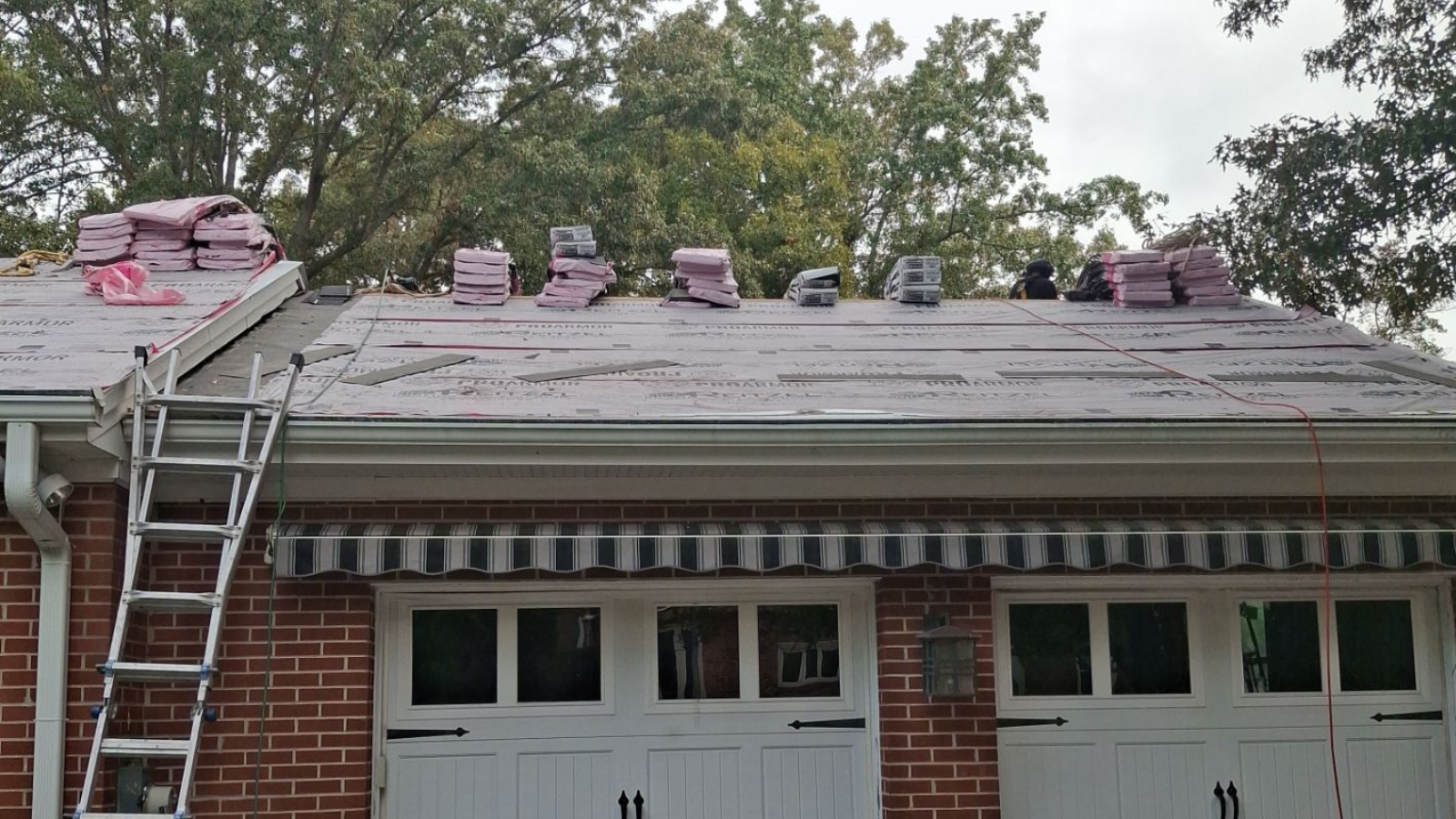
Usually not.
When shingle installation Virginia Beach issues are limited to one flashing detail, a small number of damaged shingles, a failed pipe boot, or another isolated area, repair may be possible while the rest of the roof remains sound.
The situation becomes more serious when problems appear across multiple slopes or repeated repairs fail to solve the issue. Widespread fastening errors, recurring valley leaks, significant deck deterioration, or several poorly completed transitions may require a broader plan.
The right recommendation should come from the actual condition of the roof, not from an assumption that every defect means full replacement.
Why Reitzel Roofing & Exteriors Looks Beyond the Surface
At Reitzel Roofing & Exteriors, we know homeowners want a roof they can stop worrying about.
When evaluating shingle installation Virginia Beach homeowners have questions about, we look beyond color and curb appeal. Shingle condition, flashing, valleys, roof edges, penetrations, visible repairs, drainage, ventilation clues, and accessible signs of moisture all help explain what the roof is doing.
Our goal is not to turn every loose shingle into a replacement project. It is to identify what deserves attention, explain why it matters, and help you understand the practical next step.
Final Thoughts: The Details You Cannot See Often Matter Most
A new roof should give you confidence, not a cycle of callbacks and repairs.
The challenge is that many details that determine roof performance disappear after the final shingles are installed. You cannot see every nail from the driveway. You cannot easily inspect the underlayment. You may never know how a valley was prepared or whether damaged decking was replaced unless problems appear later.
That is why workmanship matters.
For shingle installation Virginia Beach homeowners can feel confident about, the goal should not be getting shingles onto the roof as quickly as possible. It should be building a complete roofing system that manages water, stands up to local weather, and protects the home underneath.
FAQs
1: How can I tell if my shingles were installed incorrectly?
A: Some problems remain hidden, but homeowners may notice lifted or slipping shingles, uneven courses, exposed fasteners, recurring leaks around roof penetrations, excessive roofing cement, or sections that repeatedly become loose after ordinary wind. Interior clues can include ceiling stains, damp attic insulation, or darkened roof decking. None of these signs automatically proves poor workmanship because storms, age, and other roofing issues can look similar. If a relatively new roof is already showing repeated trouble, having it evaluated is smarter than continuing to patch the same symptom.
2: Can a bad shingle installation cause leaks even when the roof is new?
A: Yes. Roof age and roof quality are not the same thing. A newer roof can leak if flashing was installed incorrectly, a valley was poorly detailed, underlayment was damaged, deteriorated decking was covered instead of repaired, or a roof penetration was not integrated correctly. Water can also travel along decking or framing before appearing indoors, so the ceiling stain may not sit directly below the entry point. Finding the source early is usually far better than repeatedly sealing the location where water becomes visible.
3: How important are roofing nails during installation?
A: Very important. Nail type, placement, quantity, penetration, and driving depth all influence how shingles are attached. Virginia’s current construction code includes fastener and attachment requirements for asphalt shingles and requires roof coverings to follow applicable manufacturer installation instructions. In practical terms, the crew should follow the fastening pattern for the specific roofing product rather than use a one-size-fits-all approach. Incorrect fastening may become hidden after installation, which is one reason contractor selection and project documentation matter.
4: Does Virginia Beach require a permit when I replace my roof?
A: Yes. The City of Virginia Beach lists roofing replacement among residential alterations requiring a building permit and shows a final inspection for roofing work on its residential inspection schedule. Homeowners should discuss the permit process before work begins so it is clear who will obtain the permit and schedule the required inspection. Keep the permit records with your roofing contract, shingle information, warranties, and other project paperwork for future reference.
5: Can installation mistakes be repaired without replacing the entire roof?
A: Many can. If the issue is limited to one flashing detail, several damaged shingles, a pipe boot, or another isolated area, a professional repair may solve the problem without a complete roof replacement. The answer changes when poor workmanship is widespread or installation problems have caused significant damage underneath. If you have recurring leaks, repeated wind damage, or several repairs that have not lasted, a broader roof evaluation can help determine whether another targeted repair still makes financial sense. The best solution is the one that corrects the cause rather than repeatedly covering the symptom.