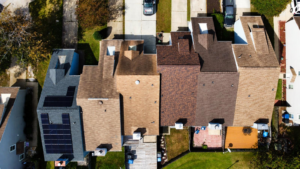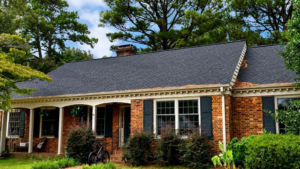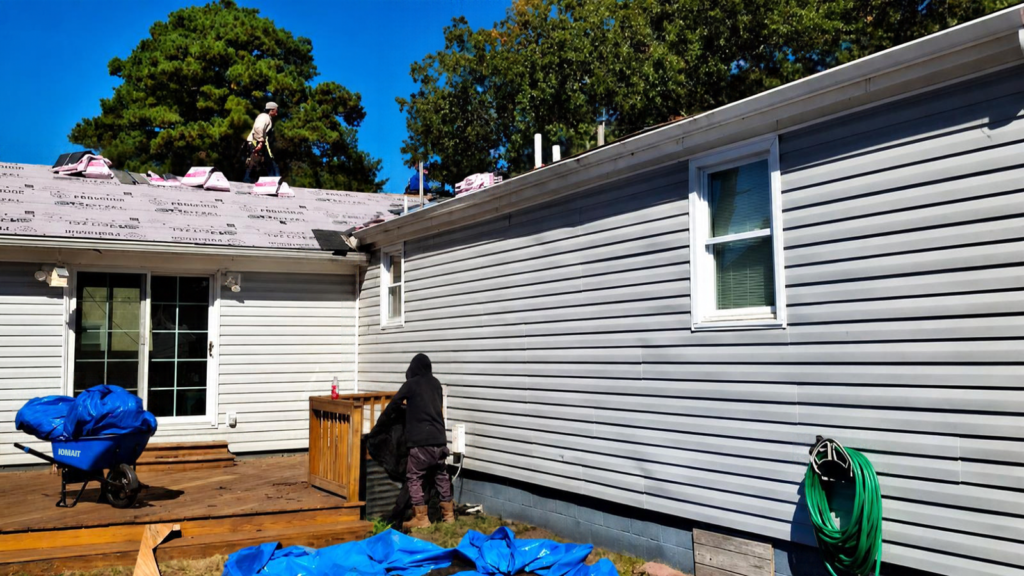
The old shingles are coming off. Thousands of nails are being pulled. Your roof deck may be exposed for the first time in decades. Crews are moving materials above your home while your driveway, landscaping, gutters, windows, attic, and everything inside sit just a few feet below.
So what is actually protecting your house while your new roof is being installed?
That is a question every homeowner should ask, and every Virginia Beach home buyer should understand before purchasing a property with an aging roof.
Professional roof replacement is not simply about tearing off old shingles and putting new ones in their place. A careful roofing crew has to protect the home throughout the process, from the first ladder setup to the final nail sweep. For buyers researching roof replacement protection Virginia contractors provide, those behind-the-scenes precautions can tell you just as much about workmanship as the shingles that eventually end up on the roof.
Virginia Beach adds another layer to the conversation. Coastal weather can change quickly. Heavy rain, wind, humid conditions, and storm exposure make timing, temporary weather protection, flashing, drainage, and proper material installation especially important.
Here is what professional roof replacement protection should look like from the moment work begins until your property is cleaned and the project is complete.
Why Property Protection Starts Before the First Shingle Comes Off
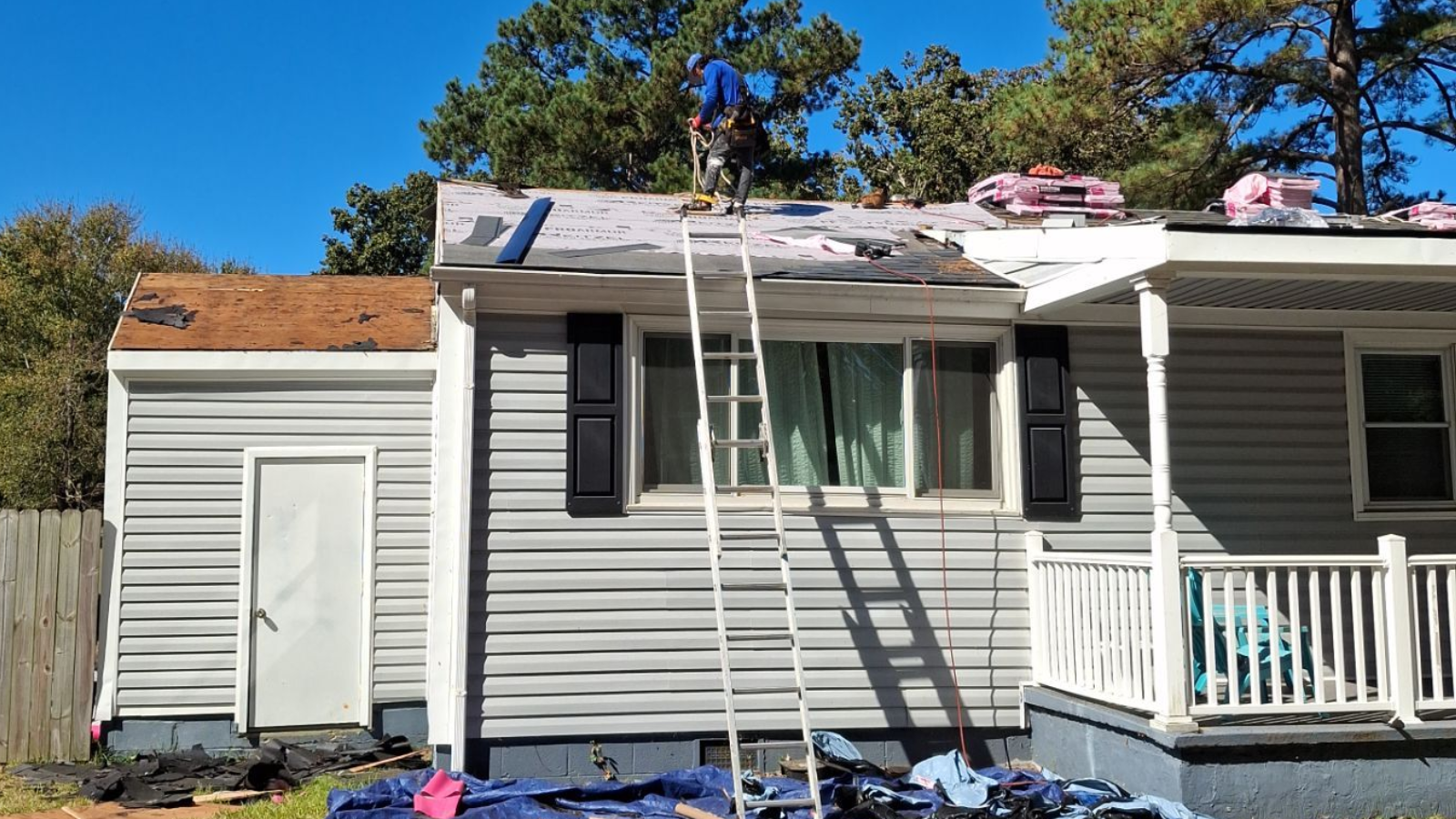
A strong roof replacement begins on the ground.
Before tear-off starts, an experienced contractor should understand the home’s layout, access points, roof pitch, landscaping, neighboring structures, driveway location, outdoor equipment, gutters, siding, windows, and areas where falling debris could cause damage.
This planning stage is easy for homeowners to overlook because nothing dramatic is happening yet.
But it matters.
Where will the dumpster or debris trailer sit? Where can materials be delivered without blocking access unnecessarily? Are there fragile shrubs beneath an eave? Is an air-conditioning unit close to the house? Are there skylights, low roofs, decks, pergolas, pools, exterior lighting fixtures, or decorative features that need additional protection?
For anyone comparing roof replacement protection Virginia homeowners should expect, this pre-job assessment is one of the first signs that a roofing company is thinking beyond the shingles.
Professionals plan where debris will fall before it starts falling.
That simple difference can help protect everything from flower beds to exterior finishes.
Home Buyers Should Care About the Installation Process Too
If you are buying a home with a recently replaced roof, you probably hear “new roof” and immediately treat it as a major selling point.
Often, it is.
But a new roof is only as reassuring as the installation behind it.
Ask when the roof was replaced, who performed the work, whether permits were obtained when required, whether warranties or invoices are available, and whether decking repairs were needed.
The City of Virginia Beach specifically lists roofing replacements among residential alterations requiring a building permit. Its residential inspection information also lists roofing work for a final building inspection.
That gives buyers something concrete to ask about.
If a seller says the roof was recently replaced, documentation can help you understand what was actually done.
For home buyers evaluating roof replacement protection Virginia properties received during previous work, invoices, permits, warranties, and contractor records can provide important context that curb appeal alone cannot.
A roof may look brand new from the street while the details underneath remain invisible.
The Tear-Off Is Where Protection Really Gets Tested
Roof tear-off can be messy.
Old shingles are removed in sections. Nails, underlayment, flashing, and damaged materials may also need to come off. Pieces of roofing material can slide toward the edges as crews work across the roof.
Professional contractors plan for that movement.
Protective coverings may be positioned around vulnerable areas of the property while the crew directs debris toward designated collection points. Instead of allowing torn shingles and nails to scatter randomly around the house, experienced roofers manage where materials leave the roof.
The objective is controlled removal.
A good crew also avoids tearing off more roofing than it can reasonably protect and progress on safely based on job conditions.
When you hear the phrase roof replacement protection Virginia homeowners often picture tarps. Tarps matter, but real protection is a complete process involving planning, staging, controlled demolition, weather awareness, temporary covering, and continuous cleanup.
That is what keeps a roof replacement from turning the rest of your property into a construction casualty.
Landscaping Deserves More Than a Quick Tarp
Virginia Beach homeowners put time and money into their yards.
Shrubs along the foundation, flower beds, decorative trees, garden areas, hardscaping, outdoor furniture, and other features may sit directly below the roofline.
During tear-off, those areas become vulnerable.
Professional crews identify landscaping that needs protection and choose methods appropriate for the property. Depending on the layout, this can include protective tarps, barriers, plywood, debris-catching systems, or carefully positioned removal routes.
The key is not simply covering everything.
Heavy materials placed directly onto delicate plants can cause their own damage. Protection should take the actual landscape into account.
Roof replacement protection Virginia homeowners receive should therefore be adapted to the home rather than treated as a one-size-fits-all setup.
A narrow lot with mature shrubs may require a different approach from an open property with plenty of space between the house and landscaping.
Attention to those details tells you a lot about how a contractor operates.
Windows, Doors, and Siding Sit Directly Below the Work Zone
Your roof does not exist separately from the rest of your exterior.
When old shingles come off, they travel past siding, trim, windows, gutters, and doors.
That creates another reason debris control matters.
Shingle bundles and torn roofing materials can be heavy. Nails and smaller pieces can scratch or damage exterior surfaces if they are handled carelessly.
Crews should also be aware of exterior lights, cameras, screens, awnings, shutters, and other fixtures around the home’s perimeter.
One careless toss from a roof can create a repair that had nothing to do with the original roofing project.
Professional roof replacement is about controlling the work from top to bottom.
The homeowner should end the project with an improved roof, not a list of new exterior repairs.
Your Gutters Need Protection During Roof Replacement
Gutters sit right at the edge of the action.
Roofers use ladders around them. Old shingles travel over them. Debris can fall into them. New roofing materials must be installed near their mounting points and roof edges.
A careless tear-off can dent gutters, loosen sections, damage hangers, or fill drainage channels with roofing debris.
Experienced crews pay attention to ladder positioning and avoid using gutters as structural support.
They should also check the roof perimeter as work progresses and remove debris that lands in the gutter system.
For buyers researching roof replacement protection Virginia Beach-area homes need, gutter protection is worth asking about because your gutters are part of the same water-management system as your roof.
A beautiful new roof connected to clogged or damaged drainage does not give you the full benefit of that investment.
Weather Planning Is One of the Most Important Forms of Protection
Few moments make homeowners more nervous than seeing an old roof removed while dark clouds start moving toward the neighborhood.
Virginia Beach roofing contractors have to work with weather, not against it.
No contractor can control the forecast perfectly, but professionals can monitor conditions, plan tear-off in manageable sections, keep temporary covering materials available, and avoid unnecessarily exposing large portions of the roof when weather conditions are questionable.
The purpose is simple: do not leave the interior of the home vulnerable.
If weather interrupts the project, exposed areas need to be protected appropriately until work can safely continue.
That is one of the most important aspects of roof replacement protection Virginia homeowners should discuss before the project begins.
Ask a contractor what happens if unexpected rain develops during tear-off.
A confident contractor should be able to explain the weather contingency process clearly rather than treating the question like an inconvenience.
The Roof Deck Is the Foundation of the New Roof
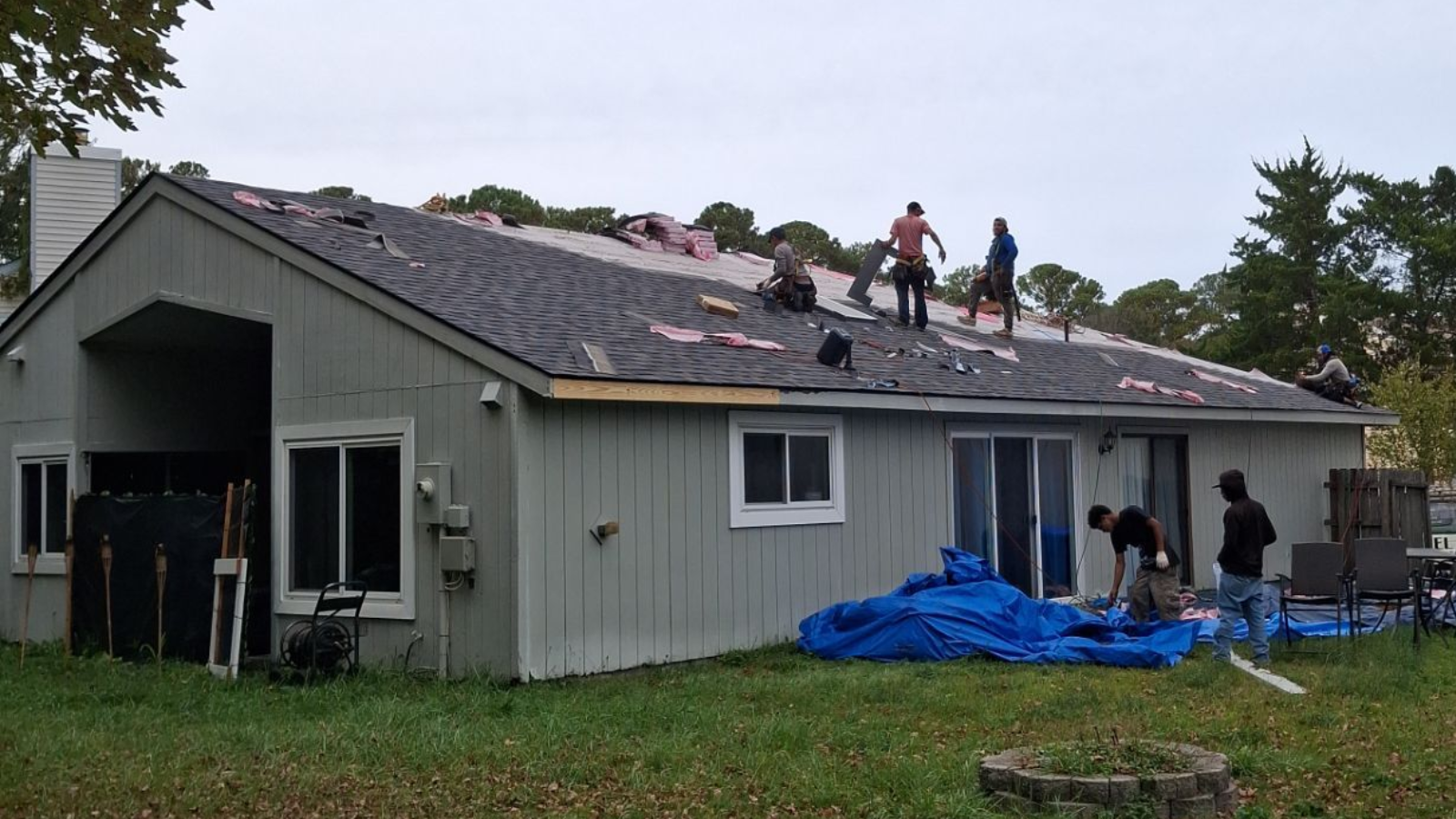
Removing old shingles gives the crew something homeowners rarely get to see: the roof deck.
This is an important moment.
The decking underneath the old roofing should be evaluated for deterioration, soft areas, water damage, rot, or other conditions that could affect the new installation.
Simply covering damaged decking with new shingles does not address the underlying problem.
A professional roofer should identify problem areas and explain how decking repairs will be handled according to the project agreement and applicable requirements.
For a home buyer, this is also why photographs from a recent roof replacement can be valuable.
If the seller has documentation showing the deck during tear-off and repairs that were completed, those records may give you additional confidence in what is now hidden underneath the finished roof.
Good roofing protects the house you see.
Great roofing also pays attention to the structure you cannot see once the project is finished.
Underlayment Protects More Than Most Homeowners Realize
Shingles are the visible roof covering, but they are not working alone.
Underlayment is installed over the roof deck beneath the finished roof covering and serves as part of the water-shedding roof assembly.
Depending on the roofing system, additional protective materials may be installed in vulnerable locations as required by the design, manufacturer instructions, or applicable building requirements.
This stage matters because the underlayment becomes another layer between weather and your roof deck.
With roof replacement protection Virginia homes depend on, the materials underneath the shingles are just as important as what looks good from the driveway.
Homeowners naturally spend time choosing shingle colors, styles, and warranties.
Those choices matter.
But ask your roofer what is going underneath them too.
A finished roof only reveals the final layer. Professional installation is about making sure the entire assembly works together.
Flashing Is Small, but It Can Make or Break the Installation
Chimneys, plumbing vents, walls, valleys, skylights, and other roof penetrations create some of the most vulnerable points in a roofing system.
That is where flashing becomes critical.
Flashing directs water away from transitions and openings where shingles alone cannot provide the complete water-management detail needed.
During replacement, existing flashing should be evaluated rather than automatically ignored just because it is less visible than the shingles.
Deteriorated, improperly installed, or damaged flashing can become a leak point even on a roof with brand-new shingles.
Virginia’s property maintenance requirements underscore why these details matter: the state’s code says roofs and flashing are to remain sound and tight and free from defects that admit rain, with adequate roof drainage to prevent dampness or deterioration in walls and interior areas.
That principle is at the heart of roof replacement protection Virginia homeowners need.
The goal is not simply a newer-looking roof.
It is a roof assembly that manages water correctly.
Roof-to-Wall Areas Need Special Attention
Some Virginia Beach homes have complicated rooflines where a lower roof meets siding, a garage roof meets a taller wall, or an addition creates multiple transitions.
These locations deserve careful attention during replacement.
Water moving down the wall and across the roof must be directed correctly, which makes flashing and siding integration important.
If previous work relied heavily on surface caulk instead of properly integrated flashing, removing the old roof may reveal issues that were not obvious beforehand.
A professional roofer does not simply cover these details and move on.
They evaluate how the transition works.
This is another reason home buyers should avoid judging roof quality based solely on shingle age.
Two roofs installed in the same year can perform very differently when the flashing and transition details are not the same.
What About the Attic and the Inside of Your Home?
Most of the work happens outside, but roof replacement can definitely be noticed indoors.
Hammering and foot traffic create vibration.
Dust or small debris already sitting on rafters or attic surfaces may shift. Items stored in the attic may be vulnerable to dust and vibration. Wall decorations or fragile objects on upper floors may also deserve a little preparation depending on the house and scope of work.
Before installation day, homeowners can ask the contractor what should be moved or protected inside.
If valuable or fragile belongings are stored in the attic, it is smart to protect or relocate them before work begins.
Pets should also be considered.
Roof replacement is loud.
Dogs, cats, and other animals may find the noise stressful, and doors or gates may be opening more frequently while crews move around the property.
Roof replacement protection Virginia homeowners should think about is therefore not limited to shingles and landscaping.
A well-planned project considers the people and animals living under the roof too.
Air-Conditioning Equipment and Exterior Systems Need Attention
Outdoor HVAC equipment is another area that may sit directly beneath a roof edge.
Roofing debris, granules, nails, and dust should not be allowed to fall carelessly into or against mechanical equipment.
Protection methods should still allow the equipment to function safely when it needs to remain operational, so this is not a situation where homeowners should independently wrap a running outdoor unit in an airtight tarp.
Instead, discuss the equipment location with the roofing company before work begins.
The same applies to generators, pool equipment, exterior electrical components, satellite equipment, and other systems positioned near the work zone.
Good preparation identifies those features before tear-off starts.
How Professional Roofers Protect Your Home at Each Stage
| Roof Replacement Stage | What Is Happening | Professional Protection Focus | Why It Matters |
| Pre-job walkthrough | Property and roof are evaluated | Identify landscaping, windows, HVAC, access, gutters, decks, and vulnerable areas | Helps prevent avoidable property damage |
| Material delivery | Shingles and supplies arrive | Controlled placement and driveway/access planning | Reduces obstruction and unnecessary surface damage |
| Tear-off | Existing roofing is removed | Debris control, tarps/barriers, controlled work zones | Protects siding, landscaping, windows, and ground areas |
| Deck inspection | Roof decking becomes visible | Identify deterioration and repair damaged areas | Gives the new roof a sound substrate |
| Weather protection | Roof may be temporarily exposed | Monitor weather and cover vulnerable sections when required | Helps prevent interior water intrusion |
| Underlayment and flashing | Water-management layers are installed | Proper integration around penetrations and transitions | Supports long-term leak protection |
| New roof installation | Finished roofing goes on | Proper fastening and installation practices | Helps the roof perform as intended |
| Cleanup | Major work is complete | Remove debris and perform nail collection | Helps restore safe use of the property |
| Final review | Project is checked | Inspect completed work and surrounding property | Gives homeowners an opportunity to address concerns |
The best roof replacement protection Virginia homeowners receive is not one special product.
It is consistent attention across every stage of the job.
Nails Are Small, but Cleanup Is a Big Deal
One of the most common homeowner concerns after roof replacement is nails.
A tear-off can involve thousands of fasteners.
Professional crews work continuously to keep debris contained, but final cleanup remains critical.
Roofing contractors commonly use magnetic collection tools to help retrieve metal fasteners from driveways, lawns, landscaping edges, and other areas around the structure. Crews also visually inspect the property and remove shingle scraps, packaging, flashing pieces, and other jobsite debris.
No cleanup method can make a realistic promise that every microscopic piece of construction debris will be discovered immediately, especially in dense landscaping.
But a professional contractor should take cleanup seriously.
For homeowners, walking the property after completion is worthwhile.
If something was overlooked, communicate it promptly.
A contractor’s response to a small cleanup concern often tells you a lot about its commitment to customer service.
Protecting the Driveway Is Part of the Plan
Driveways often become staging areas during roofing projects.
Material deliveries, trailers, dumpsters, crew vehicles, and debris removal may all involve this space.
Before work begins, homeowners should understand where equipment will be placed and whether vehicles need to be moved.
Keeping personal vehicles away from the immediate work zone can help protect them from dust, falling debris, and nails.
It also gives the crew room to work efficiently.
If you need access to a vehicle during the day, move it before roofing work starts rather than waiting until tear-off is underway.
These are simple preparations, but roof replacement protection Virginia contractors coordinate is often strongest when the homeowner and crew both know the plan before installation morning.
Ventilation Should Not Be Forgotten During Replacement
Roof replacement is an opportunity to look at more than worn shingles.
Attic ventilation is part of the roofing system and can affect heat and moisture conditions beneath the roof.
Existing intake and exhaust vents should be evaluated as part of the project, particularly if the home has experienced condensation, extreme attic heat, or previous ventilation concerns.
A contractor should consider how the existing ventilation arrangement interacts with the new roofing system rather than blindly replacing visible vents without evaluating their purpose.
For buyers looking at an older Virginia Beach property, ask whether ventilation was addressed during any recent roof replacement.
Again, documentation matters.
A “new roof” tells you when the top layer was replaced.
It does not automatically tell you how every part of the roofing system was handled.
Virginia Beach Permitting Gives Buyers Another Checkpoint
Local requirements provide another layer of accountability.
According to the City of Virginia Beach, roofing replacement is included among residential work requiring a permit, and roofing appears in its residential building inspection schedule with a final inspection requirement.
Virginia’s Uniform Statewide Building Code also establishes the regulatory framework that applies to construction, repair, renovation, and maintenance across the Commonwealth, with local building departments responsible for enforcement.
For homeowners, this means professional roof replacement should not be approached like an informal weekend patch job.
For buyers, it gives you useful questions to ask when a listing advertises a recently replaced roof.
When was it completed?
Who completed it?
Was the required permit obtained?
Are warranty documents available?
Was there a final inspection?
Are invoices or photographs available?
When evaluating roof replacement protection Virginia home buyers inherit from prior work, paperwork can help fill in the story that the finished shingles cannot tell.
What Should You Ask a Roofer Before Installation Day?
A strong conversation before signing the contract can prevent misunderstandings later.
Ask how the contractor plans to protect landscaping and exterior features, what happens if rain arrives during tear-off, how damaged decking is handled, how gutters and HVAC equipment are protected, where debris will be collected, what cleanup process is used, what materials are being installed under the shingles, and how flashing will be addressed.
Also ask who will be your point of contact if you have a question during installation.
You should not need to decode roofing terminology to understand the answer.
A contractor should be able to explain the process in plain language.
Roof replacement is a major project occurring directly above everything you value inside your home.
You deserve to know how that home will be protected.
Cheap Roofing and Professional Roofing Can Look Similar on Day One
This is where homeowners can get fooled.
When two roofs are freshly installed, both may look clean and new from the driveway.
The difference may be hidden underneath.
Was damaged decking addressed?
Was the underlayment installed properly?
Were flashing details handled correctly?
Was the property protected during tear-off?
Were roof penetrations carefully integrated?
Was the cleanup thorough?
Did the contractor follow applicable permitting and installation requirements?
Roof replacement protection Virginia homeowners should value is often found in details that disappear by the time the final shingle is installed.
That is why contractor selection should never be based on price alone.
The cheapest proposal may be completely legitimate, but make sure you understand what is and is not included before assuming two estimates represent identical work.
Home Buyers: A New Roof Should Still Be Investigated
A listing that says “NEW ROOF!” gets attention for good reason.
Roof replacement is a significant home improvement.
But as a buyer, ask for details.
A roof installed six months ago should have a clearer paper trail than one installed twenty years ago.
Request available invoices, manufacturer information, warranty documentation, permits, repair records, and contractor information.
If the home inspection raises concerns about flashing, ventilation, workmanship, attic staining, or unusual roof transitions, do not dismiss those findings just because the shingles are new.
A newer roof reduces one type of uncertainty.
It does not eliminate the need for due diligence.
Why Virginia Beach Homeowners Choose Reitzel Roofing & Exteriors
At Reitzel Roofing & Exteriors, we know your roof replacement is happening over your home, not on an empty construction site.
There may be children inside, pets in the house, landscaping you have spent years growing, vehicles in the driveway, outdoor equipment near the walls, and rooms full of everything you care about beneath the decking.
That deserves respect.
We believe professional roofing means paying attention to the entire project: planning, removal, property protection, roof-deck evaluation, water-management details, installation, cleanup, and communication.
When homeowners ask us about roof replacement protection Virginia properties need, our goal is to make the process easier to understand before work begins.
You should know what is happening above your home and why.
Your New Roof Should Protect More Than the Top of Your House
A roof replacement is one of those home projects where the finished product can make you forget how much happened underneath it.
Once the crew leaves, you see clean shingles.
You do not see the old materials that came down past your windows.
You do not see the roof deck that was exposed and inspected.
You do not see the underlayment hidden underneath.
You do not see the weather planning, the debris control, the flashing work, the protected landscaping, or the thousands of nails that had to be managed throughout the project.
But those details matter.
For homeowners and buyers comparing roof replacement protection Virginia roofing companies provide, the best contractor is not simply the one that can install shingles quickly.
It is the team that understands there is an entire home beneath those shingles.
A new roof should not just look good when the project is finished.
The process should leave you feeling good about how your home was treated along the way.
FAQS
1: Will my home be exposed to rain during a roof replacement in Virginia Beach?
A: A professional roofer plans the replacement around weather conditions and tries to avoid leaving more roof exposed than can be safely managed, but weather can change and every project has different conditions. That is why temporary weather protection and a clear rain plan are so important. Before work starts, ask your contractor how much roofing is typically removed at one time, what happens if unexpected rain develops, and what materials are available to protect exposed areas. Here in Virginia Beach, where coastal weather and heavy rain deserve respect, the answer should involve more than “we’ll watch the forecast.” Thoughtful roof replacement protection Virginia homeowners should expect includes monitoring conditions throughout the project and having a practical plan for protecting vulnerable roof areas if work has to stop.
2: How will roofers protect my landscaping, windows, and siding during tear-off?
A: Protection varies depending on the home’s layout, but professional crews should identify vulnerable areas before tear-off begins and create controlled pathways for removing old roofing materials. Landscaping may require carefully placed coverings or barriers, while windows, siding, exterior fixtures, decks, and other features should be considered when establishing debris-drop areas. The objective is to direct shingles and construction debris away from valuable surfaces rather than simply letting material slide wherever gravity takes it. Homeowners can help by pointing out particularly valuable plants, delicate outdoor features, irrigation equipment, or recently completed exterior work before installation day. A few minutes of conversation before the first shingle comes off can prevent a lot of frustration later.
3: Should I stay home while my roof is being replaced?
A: You can often remain home during a residential roof replacement, but be prepared for significant noise, vibration, crew activity, and restricted areas around the exterior. If you work from home, have small children, own noise-sensitive pets, or need a quiet environment, you may find it more comfortable to spend part of the installation day elsewhere. Valuable or fragile items in the attic should be covered or moved, and delicate wall decorations may be worth securing because hammering can create vibration throughout the structure. Move vehicles away from the work zone before crews begin, and ask where it will be safe to enter and exit the home. The contractor should explain what areas should be avoided while overhead work is underway.
4: What happens if roofers find damaged wood after removing my old shingles?
A: Roof decking problems are sometimes impossible to fully confirm until the old roofing materials have been removed, which is why homeowners should understand the contractor’s decking-repair process before work begins. If deteriorated, soft, or otherwise unsuitable decking is discovered, a professional roofer should explain what was found and how the affected area needs to be addressed before covering it with the new roof assembly. Your contract should also explain how unforeseen decking replacement or additional work is priced when applicable. For home buyers reviewing a recently replaced roof, photographs or invoices showing decking repairs can be useful records because the repaired areas become hidden once underlayment and shingles are installed. Covering bad wood simply to keep the project moving is not the kind of roof replacement protection Virginia homeowners should be paying for.
5: How can I tell whether a Virginia Beach roofing contractor takes property protection seriously?
A: Pay attention to what the contractor discusses before you sign, not just what appears in the shingle brochure. Ask directly about weather planning, landscaping, gutters, windows, HVAC equipment, decking inspection, flashing, cleanup, nail collection, permitting, and what happens if something on the property is accidentally damaged. A professional contractor should be able to explain the process without becoming vague or defensive. Also look for a clear written scope of work rather than relying entirely on verbal promises. In Virginia Beach, roof replacement is listed by the city as residential work requiring a building permit and final inspection, so permitting is another reasonable topic to discuss. Clear answers before installation usually lead to fewer surprises once the roof is open.