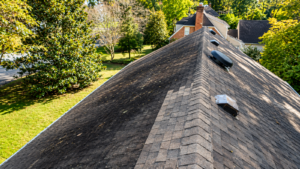
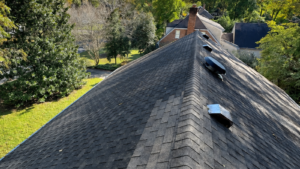
Try this next time you’re in the driveway. Look at the very top line of your roof, the part where the two slopes meet. Can you say, with a straight face, what condition it’s in? Most people can’t. It’s the highest, thinnest, hardest-to-see part of the house, so it gets ignored until water shows up on a bedroom ceiling and everyone starts guessing where it came from.
That guess is often wrong, and the ridge is a surprisingly common culprit. A roof ridge inspection Virginia Beach homeowners schedule before something leaks costs far less than the repair that follows one. At Reitzel Roofing and Exteriors, we spend a lot of time on Hampton Roads rooftops, and the peak is one of the first places we look. This guide explains what’s up there, why our coastal weather is rough on it, what damage actually looks like, and how you can check without ever leaving the ground.
What Your Roof Ridge Actually Does
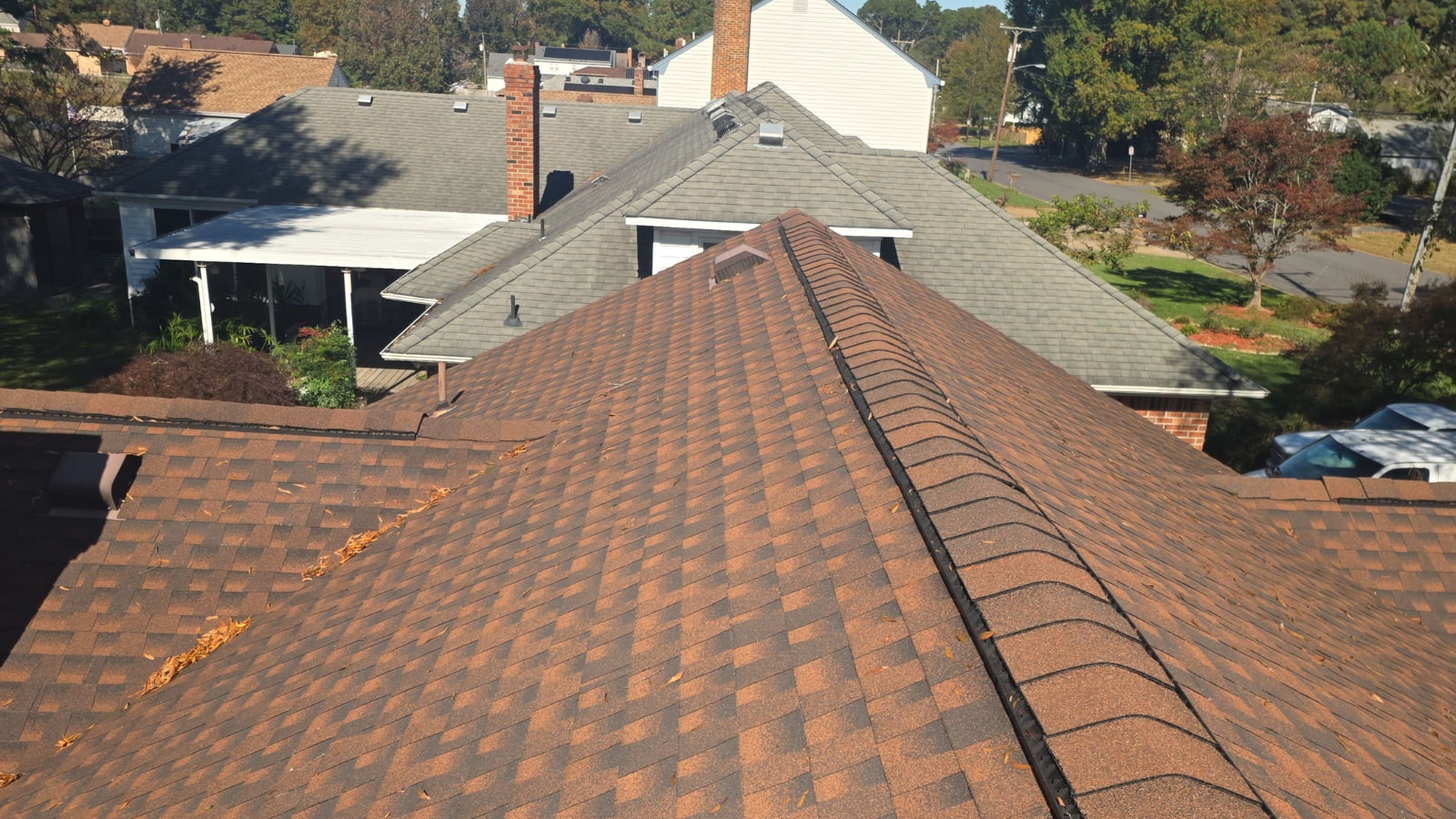
The ridge is the horizontal line at the top of a roof where two sloped sections meet. It sounds like a simple seam, but it carries a few jobs at once.
First, it has to shed water. Rain runs down both slopes and away from the peak, so anything installed there has to stay sealed against water coming from either side. Second, on most modern homes, the ridge is where hot, humid attic air escapes. Many roofs use a ridge vent, a long vent that runs along the peak and is covered by ridge cap shingles. Third, the ridge takes the full force of the wind. Air accelerates as it climbs a roof and hits the peak, which is why caps and vents are usually the first pieces to lift in a storm.
A good roof ridge inspection Virginia Beach roofers perform looks at all three: water-shedding, ventilation, and wind resistance. If one is failing, the others usually are not far behind.
Why Virginia Beach Is Hard on a Roof Peak
Our weather puts the ridge to work. According to NOAA, the Atlantic hurricane season runs from June 1 through November 30, and Hampton Roads sits right in the zone where those storms and the nor’easters that follow them push wind and rain onto the coast. Even a storm that never makes the evening news can lift a loose ridge cap, because the peak is where wind pressure is highest.
Wind-load guidance for the city backs this up. Based on figures published by Windload Solutions, design wind speeds in Virginia Beach run roughly 120 to 130 miles per hour depending on the site, which is the standard builders are expected to design around. That’s a lot to ask of a row of small shingles nailed along a peak.
Then there’s the rest of the year. Humid summers keep attics damp, salt air near the oceanfront wears metal fasteners and flashing, and the temperature swing between a hot July afternoon and a cold January night makes roofing materials expand and contract again and again. Every cycle works a tiny bit looser. That’s the slow side of why a roof ridge inspection Virginia Beach properties need isn’t just a storm-season chore.
The Parts of the Ridge Worth Knowing
You don’t need to be a roofer to follow this, but knowing the vocabulary makes the conversation with a contractor easier.
Ridge cap shingles are the pieces that cover the peak itself. They’re bent over the top and overlap like the shingles on the slopes. They take the most abuse and are the most likely to crack, curl, or blow off.
Ridge vent is the continuous vent under the cap shingles. It lets warm, moist attic air out along the full length of the peak. When it works, the attic stays drier and cooler. When it’s damaged or blocked, moisture builds up.
The roof deck at the peak is the wood sheathing underneath. If water gets past the cap, this is what soaks.
Flashing and sealant show up where the ridge meets a chimney, a wall, or a different roof section. These transitions are small, and small details leak.
What a Damaged Roof Ridge Actually Looks Like
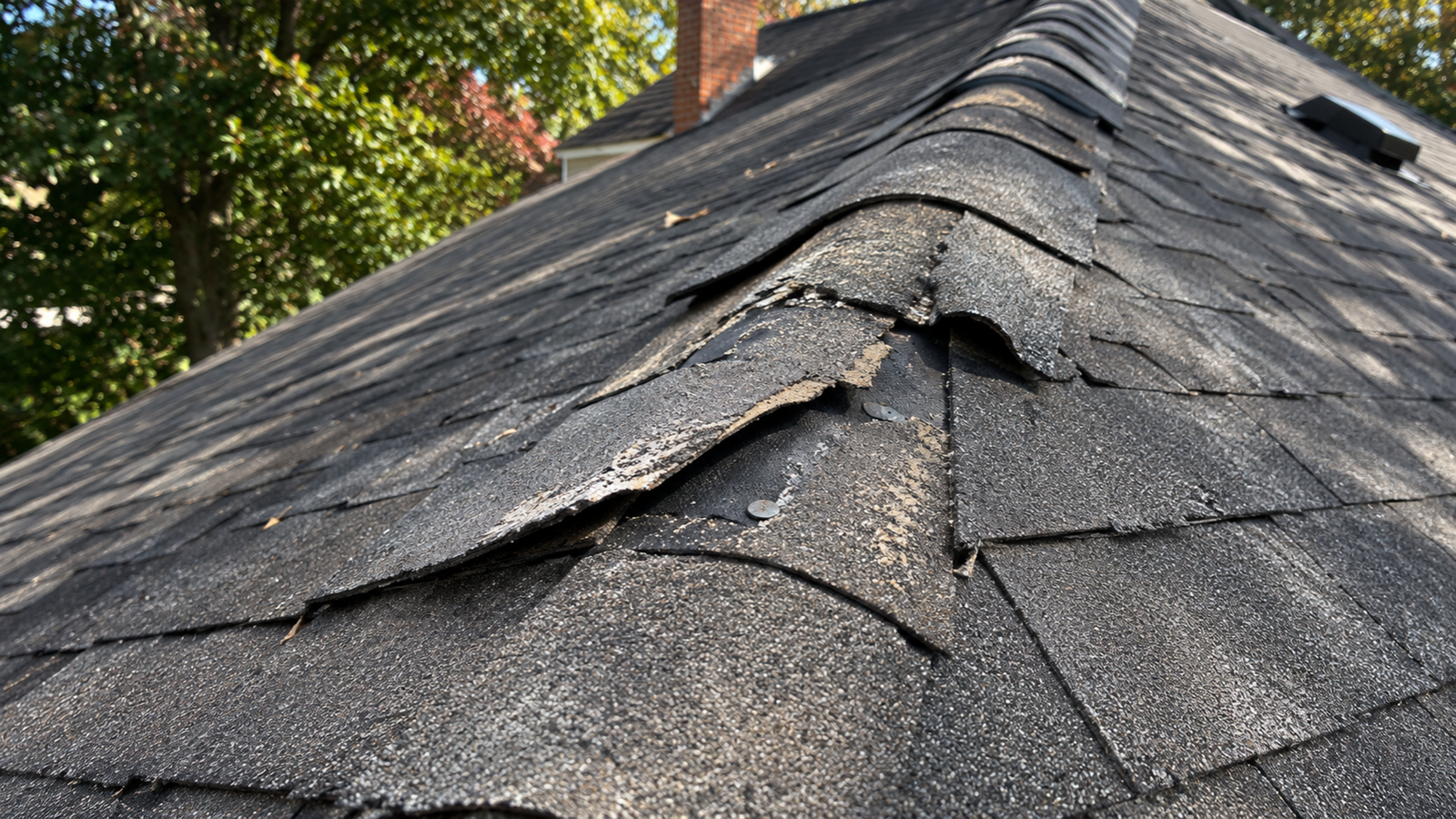
Knowing the parts is one thing. Recognizing trouble is another, so we put together an illustration of the most common problems (see the image above). Here is what each one looks like from the yard with a pair of binoculars.
A cracked cap shows up as a thin dark line running across a ridge shingle, usually right where it bends over the peak. Cracks start small. Left alone, they widen and a corner snaps off in the next good wind.
A missing cap looks like a gap in the otherwise even line of the ridge. You’ll often see a darker patch of underlayment or bare wood where the shingle used to be. That is an open door for rain, and it can’t wait for next year’s maintenance.
A lifted ridge vent appears as a visible gap or shadow along the edge of the vent, or a section that sits higher than its neighbors. Wind-driven rain goes straight through that opening.
Raised nails look like small bright dots on the cap shingles. They’re nail heads backing out of the deck, often because of those thermal swings. Each one is a tiny hole waiting for water.
Dark streaks running down the slope from the ridge can mean water has been working its way out of the peak and washing grime down the roof.
If you spot any of these, take a photo with your phone zoomed in, note the date, and call a roofer. A clear picture helps us tell you how urgent it is.
Warning Signs You Can Spot From the Ground
A basic roof ridge inspection Virginia Beach homeowners can do themselves needs no ladder, and honestly you shouldn’t use one. A decent pair of binoculars on a clear day will show you quite a bit.
Look for ridge cap shingles that are cracked, curled at the edges, or missing entirely. Check whether the peak line looks straight or whether it dips and waves, which can mean deck damage underneath. Notice any dark stripes or streaks running down from the ridge. Scan for pieces of the ridge vent that look broken, shifted, or lifted. And after a windy night, glance up and see whether anything looks different from the day before.
Inside the house, the attic tells its own story. Dark stains on the wood near the peak, damp insulation, a musty smell, or visible daylight where you shouldn’t see any are all worth a closer look. So are brown stains on the ceiling below, especially along the upper floor. Water that gets in at the ridge usually travels before it shows itself, so the stain may sit well away from the actual problem.
Table: What to Check at the Ridge and What It Means
| Ridge Component | What to Look For | What It Often Means | How Soon to Act |
| Ridge cap shingles | Cracks, curling, missing pieces | Age, wind damage, or loose nails | Soon, before the next storm |
| Ridge vent | Cracked sections, lifted or shifted vent | Impact, wind, or poor installation | Soon, openings let water in |
| Fasteners | Nail heads backing out or exposed | Thermal movement, short or loose nails | Moderate, easy fix if caught early |
| Peak line | Sagging or wavy ridge line | Possible deck or framing problem | Promptly, needs professional eyes |
| Flashing at walls and chimneys | Gaps, rust, dried sealant | Failing seal where roof sections meet | Soon, a common leak source |
| Attic near the peak | Stains, damp insulation, daylight, mold | Water or moisture already getting in | Promptly |
| Algae or heavy debris | Dark growth or buildup along the ridge | Trapped moisture, slow wear | Moderate, clean and monitor |
Use the table as a starting point. What a roof ridge inspection Virginia Beach contractors recommend for your home depends on the age of the roof, the materials, and how exposed the peak is to wind.
What a Roof Ridge Inspection Virginia Beach Pros Do That You Can’t
When we walk a ridge, we’re checking whether cap shingles are sealed down or just sitting there, whether nails are driven at the right depth, and whether the ridge vent is sitting flat on the deck or has lifted at the edges. We press along the line to feel for soft spots. We look at the end of the vent where it meets the rake, because that’s where wind-driven rain likes to sneak in.
In our experience, ridge vents rarely wear out from age alone. They tend to fail from installation mistakes or from damage. The classic problems we see are a vent end left open at the rake, which invites rain in; nails too short to hold the vent and caps down through a storm; and ridge caps cut from ordinary field shingles that end up blocking the vent opening. If a ridge was installed badly years ago, you may not know until a storm finds the weak point.
The Ventilation Side of a Roof Ridge Inspection
Most people think of the ridge as a water problem. It’s just as much an air problem. A ridge vent is meant to exhaust warm, humid air from the attic. If it’s blocked by debris, nesting material, or the wrong ridge cap, that air stays put. In a humid place like Virginia Beach, a damp attic means condensation on the underside of the deck, moldy insulation, and a roof that ages faster.
One simple check is a daylight test from inside the attic. If the ridge slot was cut properly, you can often see thin lines of light along the peak. If you see none on either side, the slot may not have been cut through all the way, and the vent can’t do its job. It’s a ten-minute look that tells you a lot, and it’s a normal part of any roof ridge inspection Virginia Beach roofing crews offer.
After a Storm, Do This
Wind and falling debris are hard on the ridge, so a short check after any storm is worth the effort. Walk around the house and look up. Check the yard for shingle pieces, which often come from the peak first. Use binoculars to scan the ridge for missing caps or a lifted vent. Peek into the attic and look for fresh stains or drips along the peak. And if anything looks off, call someone before the next round of rain.
A prompt roof ridge inspection Virginia Beach homeowners book after a storm also helps keep a small repair from becoming a ceiling replacement.
Should You Climb Up There Yourself?
Please don’t. The ridge is the highest and steepest point of the roof, and the shingles are often slick with dew, algae, or debris. Falls from roofs cause serious injuries every year, and it’s not worth the risk to save a service call.
Walking on cap shingles and ridge vents can also crack them, so you can end up causing the damage you were checking for. Binoculars, a phone with a zoom lens, and a flashlight in the attic will get you most of the way. For a full roof ridge inspection Virginia Beach homeowners should hand the close-up work to a trained crew.
Repair or Replace: What Usually Happens
The good news is that ridge problems are often fixable without touching the rest of the roof. A few missing or cracked cap shingles can usually be replaced and re-sealed. A lifted section of ridge vent might need to be re-fastened or swapped out. Loose nails can be re-driven or replaced with longer ones, and failing sealant at flashing can be redone. Plenty of roof ridge inspection Virginia Beach visits end with a short repair list instead of a new roof.
Things get bigger if the deck at the peak has soaked through and gone soft, or if the whole ridge vent was installed wrong and needs to be replaced. And if the shingles on the rest of the roof are old and brittle, it may make more sense to talk about replacing the roof than patching the top of it. A straight-talking contractor will tell you which situation you’re in and show you photos, not just quote a number.
When to Schedule a Roof Ridge Inspection Virginia Beach Homes Need
A few moments make good sense for a ridge check. Once a year is a solid habit, ideally in spring, before storm season gets going. After any significant storm, since wind is what loosens caps and vents. If you notice ceiling stains, a musty attic, or shingle bits in the yard. If your roof is more than about fifteen years old. And before you list the house, so a buyer’s inspector doesn’t find something you could have fixed on your own schedule.
Homes in tree-heavy parts of Virginia Beach, like Kempsville and Alanton, collect more debris along the peak. Homes closer to the oceanfront, around Sandbridge and Great Neck, deal with more salt and wind. Either way, a regular look at the ridge pays for itself.
Questions to Ask a Roofer Before You Hire
Not every company handles the ridge with the same care, so ask a few direct questions. Do you inspect the ridge vent and the attic side as well as the shingles? How do you fasten ridge caps and vents, and what length nails do you use? Will you show me photos of anything you find? Real detail in the answers is a good sign. Vague answers are a reason to keep looking. A thoughtful roof ridge inspection Virginia Beach companies perform should leave you understanding exactly what’s going on up there.
Final Thoughts
The ridge is easy to ignore because you rarely see it up close. But it’s the part of the roof that handles the most wind, hosts the vent that keeps your attic dry, and gets hit hard by our coastal weather. Putting a regular roof ridge inspection Virginia Beach on your calendar, whether that’s a binocular check from the lawn or a proper visit from a crew, can save you from a surprise leak later.
FAQs
1: How often should my roof ridge be inspected?
A: A yearly roof ridge inspection Virginia Beach homeowners schedule each spring is a good baseline for most homes, with an extra check after any major storm. If your roof is older, if you have lots of trees nearby, or if you live close to the oceanfront where salt and wind are tougher on materials, checking twice a year isn’t overkill. The ridge is exposed to more wind than anywhere else on the roof, so it tends to show wear first.
2: Can I tell if my ridge is damaged without going on the roof?
A: Often, yes. From the ground, binoculars will show missing or cracked cap shingles, a lifted ridge vent, or a sagging peak line. In the attic, look for stains near the peak, damp insulation, or unexpected daylight. These checks won’t replace a professional inspection, but they can tell you when it’s time to call one, and they’re safe because you stay off the roof.
3: What does a ridge inspection cost, and is it worth it?
A: Many roofing companies offer free or low-cost inspections, and a roof ridge inspection Virginia Beach crews do is usually part of a full roof inspection, so ask what’s included when you book. Compared with the cost of repairing water damage to decking, insulation, and drywall, it’s a small expense. Catching a few loose cap shingles early is almost always cheaper than dealing with a leak after a storm.
4: Is a damaged ridge cap an emergency?
A: It depends. A single cracked cap shingle isn’t usually an emergency, but it’s a gap, and gaps let water in. If a storm has torn off part of the ridge or vent, or you can see daylight through the peak from the attic, treat it as urgent and get a temporary cover in place until a proper repair is done. When in doubt, call and ask. A quick conversation is better than a guess.
5: Does a ridge vent really matter in Virginia Beach?
A: Yes. Our humid climate means attics collect moisture, and a working ridge vent helps move it out. A blocked or damaged vent can lead to condensation, mold on the roof deck, and shingles that wear out early. Ridge vents are also a common entry point for wind-driven rain when they’re installed incorrectly, which is why they deserve attention during any roof ridge inspection Virginia Beach roofers perform.