From the driveway, your roof may look like one continuous system.
Get a little closer, though, and the story can change.
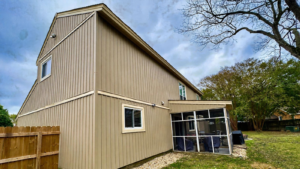
A main two-story roof may connect to a lower garage. A porch roof may tuck beneath second-story siding. Dormers create valleys. An addition may have a completely different slope. Chimneys, plumbing vents, skylights, gutters, and wall intersections interrupt the surface even further.
One home can easily contain several roofing environments, and they do not always age at the same rate.
That is why a roof inspection Virginia Beach homeowners schedule should never be reduced to a quick look at the shingles facing the street. A roof can look healthy across its largest slope while a hidden valley, low-slope addition, flashing transition, or rear roof section is quietly developing a problem.
Virginia Beach weather makes those overlooked areas especially important. Heavy rain, humidity, strong winds, intense summer sun, and seasonal storms continually test the places where roof sections meet.
So, is every part of your roof actually being checked?
Why Multiple Rooflines Change the Inspection
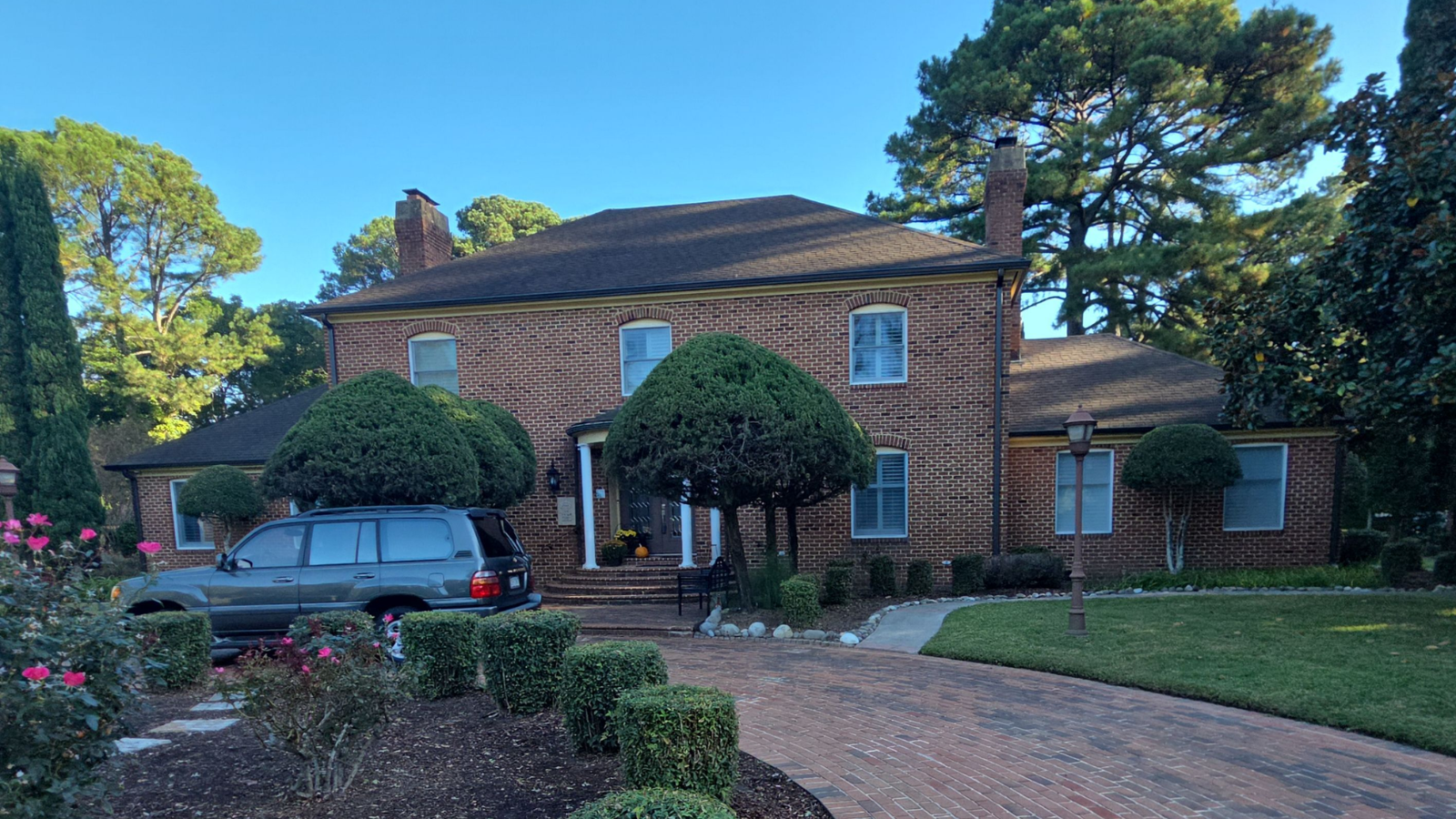
Simple gable roofs are relatively straightforward. Water generally moves from the ridge toward the eaves, and there are fewer transitions to interrupt that path.
Modern and remodeled homes can be much more complicated.
Dormers create additional corners and flashing points. Attached garages can sit below the main roof. Porches may have lower slopes. Additions can meet original construction at awkward transitions. Two roof planes may intersect and create valleys that carry large amounts of runoff.
Every change in direction creates another detail that has to manage water correctly.
For a thorough roof inspection Virginia Beach homeowners should expect the inspector or roofing professional to consider all accessible slopes, transitions, penetrations, drainage paths, and vulnerable intersections instead of treating the roof as one flat checklist item.
The more complex the roofline, the more important that becomes.
The Front Roof Is Not Necessarily the Problem Roof
The roof section facing the street gets most of the attention.
It is what homeowners see when pulling into the driveway. It is what appears in listing photos. It may also receive different sun and wind exposure from the back of the home.
Meanwhile, the rear roof could remain shaded longer after rainfall.
One side may receive the strongest afternoon sun.
Another may face the direction of prevailing storms.
A roof section beneath trees may collect significantly more leaves and debris.
The result is uneven aging.
Shingles installed on the same day can look very different years later simply because they have lived under different conditions.
A complete inspection should therefore evaluate every practical roof elevation rather than assuming the condition of the front slope represents the entire home.
Valleys Deserve Extra Attention
If two roof slopes meet and create a channel, you have a valley.
Valleys are among the hardest-working areas of many roofs because water from multiple sections is concentrated into one drainage path.
During a heavy Virginia Beach downpour, a valley can move a tremendous amount of water.
Leaves, pine needles, granules, and other debris may also collect there. If flashing, underlayment, shingles, or valley materials become damaged, that concentrated runoff can find a vulnerable point quickly.
During a roof inspection Virginia Beach valleys should be checked for visible deterioration, damaged shingles, unusual repairs, debris buildup, exposed materials, corrosion where applicable, and signs that water is not flowing as intended.
Repeated roof cement or sealant in a valley deserves questions too.
A patch may be legitimate, but homeowners should understand why it was necessary and whether the original source of the problem was corrected.
Dormers Create Several Vulnerable Areas at Once
Dormers add character to a home.
They also create additional roofing transitions.
A dormer may introduce sidewalls, small valleys, roof-to-wall flashing, corners, siding transitions, and its own roof covering. Water coming down the main roof has to be managed carefully around the dormer rather than allowed to travel behind its siding or flashing.
This is exactly the type of area that can be missed during a rushed inspection.
Look for discoloration near dormer walls, deteriorated siding or trim, loose flashing, excessive sealant, damaged shingles, and staining inside rooms or attic areas nearby.
A leak that appears around a dormer window may not actually be a window problem. Water could be entering higher up where the roof meets the wall.
That is why good diagnosis matters.
Lower Roofs Can Behave Differently
Does your home have a porch, sunroom, garage, or addition with a flatter-looking roof than the main house?
Do not assume the same installation details apply everywhere.
Lower-slope sections move water more slowly than steeper roof planes and can require different water-management details depending on the roofing material and slope.
They may also sit directly beneath an upper roof.
That means rainwater from the larger upper section can be discharged onto or toward the smaller roof below.
A good roof inspection Virginia Beach homes with additions receive should identify these differences instead of treating the lower section as simply an extension of the main roof.
If one portion of your home has experienced recurring leaks while the rest of the roof stays dry, the slope and transition details are worth investigating.
Roof-to-Wall Connections Are Easy to Overlook
Any place where a roof meets a vertical wall deserves attention.
This commonly happens beside dormers, second-story walls, garages, additions, and other architectural features.
Flashing is supposed to help guide water away from these intersections.
When flashing is damaged, poorly integrated, or heavily patched, moisture may work behind the siding or roofing instead.
Sometimes homeowners repeatedly caulk the visible joint because that looks like the obvious entry point.
But roofing systems are designed to manage water through overlapping layers and correctly installed flashing. Sealant alone should not have to carry the entire job.
If a wall next to a roof shows peeling paint, staining, swollen trim, or siding deterioration, have the roof transition evaluated rather than assuming the wall itself is the only problem.
Chimneys Add Another Complicated Transition
A chimney interrupts the roof and creates four sides where water must be managed.
Depending on its size and design, the system may use step flashing, counter flashing, and additional water-diversion details.
The uphill side is particularly worth inspecting because water and debris can collect behind a wide chimney.
A proper roof inspection Virginia Beach homeowners request should look at the visible chimney flashing, surrounding shingles, masonry condition where relevant, and any signs of previous patching.
Inside the house, stains near a chimney deserve careful diagnosis.
The leak may involve roofing, flashing, masonry, or another component entirely.
Replacing a few shingles without determining the actual source may not stop it.
Plumbing Vents and Roof Penetrations Are Small but Important
Roof vents and plumbing pipes may look insignificant compared with an entire roof slope.
But every penetration represents an opening through the roofing system.
Pipe boots can crack or deteriorate. Flashing can loosen. Sealants can age. Vent covers can become damaged during storms.
A leak around one plumbing vent can eventually stain decking, insulation, drywall, and ceilings even though nearly every shingle on the roof remains perfectly healthy.
This is why homeowners should be skeptical when someone evaluates a roof entirely from a distance and declares the entire system “fine.”
Sometimes the most important problem on a 2,000-square-foot roof occupies only a few inches.
Gutters Tell You How the Roof Is Managing Water
The inspection should not stop at the edge of the shingles.
Gutters and downspouts are connected to roof performance because they control where runoff goes after leaving the roof surface.
Virginia’s official home-inspection standards specifically identify the roof drainage system, including gutters and downspouts, as part of the roof systems licensed inspectors evaluate when readily accessible. The standards also include roof covering, ventilation, visible flashing, skylights, chimneys, penetrations, roof framing, sheathing, attic, and insulation.
That broader scope matters.
During a roof inspection Virginia Beach gutters may reveal heavy granule accumulation, overflowing areas, loose sections, drainage problems, or evidence that one section of the roof is moving water poorly.
A clogged gutter can also send water back toward fascia and roof edges or dump runoff down siding and near the foundation.
The roof and drainage system should be evaluated together.
The Attic Can Reveal What Shingles Hide
Exterior observations tell only half the story.
When the attic is safely accessible, it can reveal evidence that would be difficult to identify from above.
Look for water staining on roof decking, dark trails near rafters, damp insulation, rusty fasteners, deteriorated wood, or signs of older repairs.
Pay special attention below complicated roof intersections.
If the home has several valleys, dormers, additions, and penetrations, attic staining can sometimes help narrow down where water has been traveling.
Virginia inspection standards specifically include roof framing, sheathing, attic space, and attic insulation among the readily accessible roof-related components inspectors evaluate.
That makes the attic an important part of a complete roof assessment, not an optional afterthought.
Why One Leak Can Be Hard to Trace
Water does not always fall straight down from the hole where it entered.
It can move along the roof deck.
It can follow framing.
It can travel behind flashing.
It can run several feet before finally dripping onto insulation or drywall.
That is why the ceiling stain over your hallway may not mean the roofing directly above the hallway is damaged.
On a home with several intersecting rooflines, tracing water can be even more complicated.
For a professional roof inspection Virginia Beach homeowners should expect the visible interior symptom to be treated as a clue, not automatically identified as the exact source.
Accurate diagnosis can save you from paying for repairs in the wrong place.
Different Roof Sections May Be Different Ages
Additions complicate roof history too.
Maybe the main house was reroofed twelve years ago, but the garage was replaced after a storm five years later.
Perhaps a porch addition received roofing when it was constructed.
Maybe only one slope was repaired after tree damage.
From the ground, the materials can look similar enough that homeowners assume everything was installed at the same time.
Ask about repair history whenever possible.
Different installation dates can explain why one area shows significantly more wear than another.
They can also affect decisions about whether localized repair or broader replacement makes more sense.
Storm Damage Does Not Hit Every Roof Plane Equally
Wind direction matters.
One slope may take the brunt of a storm while the opposite side remains relatively protected.
Ridge materials and roof edges can experience different forces than central shingles. Tree limbs may affect only the rear of the house. Wind-driven rain can expose one flashing detail without causing trouble elsewhere.
After strong weather, do not check only the roof section you can see from the driveway.
A storm-focused roof inspection Virginia Beach homeowners arrange should account for the entire roofing system and areas that may have experienced different exposure.
The absence of missing shingles on the front slope does not prove the rest of the roof escaped damage.
What a Complete Roof Inspection Should Cover
| Roof area | What should be checked | Why it matters |
| Main roof slopes | Shingle wear, lifting, cracking, missing materials, visible repairs | Establishes overall roof-covering condition |
| Valleys | Debris, deterioration, repairs, flashing or lining concerns | Valleys carry concentrated runoff |
| Dormers | Sidewall flashing, shingles, trim and wall transitions | Multiple components meet in a small area |
| Lower roof sections | Slope, drainage, roofing condition and upper-roof runoff | Lower slopes can manage water differently |
| Chimneys | Flashing, surrounding roofing and visible transitions | Chimneys create several potential water-entry points |
| Plumbing vents | Boots, flashing and surrounding shingles | Small failures can create localized leaks |
| Roof-to-wall areas | Flashing, siding condition and previous patches | Wind-driven rain can test these transitions |
| Ridge and hips | Ridge materials, damage and visible movement | High points can receive significant wind exposure |
| Gutters and downspouts | Debris, attachment, drainage and overflow evidence | Roof runoff must leave the structure effectively |
| Attic | Deck staining, moisture clues, insulation and framing | Helps reveal concealed or historic leakage |
| Soffit and fascia | Deterioration, staining and ventilation openings | Problems may indicate drainage or roof-edge concerns |
A detailed roof inspection Virginia Beach homeowners receive should connect these areas rather than simply produce a sentence saying, “Shingles appear serviceable.”
What Virginia Requires From Licensed Home Inspectors
Virginia’s standards provide a useful benchmark for what homeowners should expect from a residential home inspection.
The rules require licensed inspectors to evaluate and describe readily accessible roof covering, roof ventilation, roof drainage, readily visible flashing, skylights, chimneys, roof penetrations, framing, sheathing, attic areas, and insulation, subject to the inspection contract. Inspectors must also explain the method used to inspect the roof covering.
If a component cannot be inspected, the report must identify it and explain why.
That last detail is valuable.
If part of your roof is inaccessible because of height, slope, weather, or another limitation, homeowners should know rather than assume the entire system received the same level of inspection.
A limitation is not automatically a problem.
An unexplained blind spot is.
When Should You Consider a More Focused Roofing Evaluation?
A general home inspection and a roofing contractor’s evaluation serve different purposes.
Homeowners may want a more focused evaluation when they notice recurring leaks, unexplained attic staining, missing shingles, unusual patchwork, deteriorated flashing, storm damage, or problems concentrated around a complex roof transition.
The same applies if part of the roof was inaccessible during a previous inspection.
Do not wait for water to start dripping onto the floor before asking questions.
A small roof issue is generally easier to understand before it damages multiple layers of the home.
Recent Roof Replacement? Keep the Records
If your home has multiple rooflines and one or more sections were recently replaced, save the paperwork.
The City of Virginia Beach currently lists roofing replacement among residential alterations requiring a building permit. The city’s inspection schedule also lists roofing work for a final building inspection.
Keep permit records, invoices, warranty information, material specifications, photographs, and contractor documentation together.
Those records can help explain which roof sections were worked on, when the project occurred, and what may still be original.
For a future roof inspection Virginia Beach contractors can use that history alongside the physical condition they observe.
Documentation turns “I think that section was replaced a few years ago” into something much more useful.
Do Not Let a Quick Inspection Create False Confidence
Most roofs do not fail everywhere at the same time.
They develop local weaknesses.
One pipe boot cracks.
One valley starts leaking.
One wall transition loses its seal.
One shaded section develops heavier deterioration.
One gutter stops draining properly.
That is precisely why homes with multiple rooflines deserve a complete evaluation.
You are not looking for reasons to worry about every corner of your roof.
You are making sure every corner gets a fair look.
Why Reitzel Roofing & Exteriors Looks at the Entire System
At Reitzel Roofing & Exteriors, we know a roof is more than its largest field of shingles.
A proper roof inspection Virginia Beach homeowners can use should consider how the different pieces interact.
Where does water concentrate?
Where does one roof meet another?
Where do walls interrupt the roof?
Are gutters moving runoff properly?
Do visible repairs make sense?
Are there attic clues beneath complicated transitions?
Does one roof section appear to be aging differently from the rest?
Those questions help turn a quick visual check into useful information.
Our goal is not to make every roof detail sound like an emergency.
It is to help homeowners understand what is performing well, what should be monitored, and what may need attention before the next hard storm finds it for you.
Final Thoughts: Your Home May Have One Address, but Your Roof Has Many Stories
One home can have five, six, or even more distinct roofing areas.
The front slope may be fine.
The rear valley may not be.
The main roof may have years of service left while the porch roof needs attention sooner.
A chimney flashing problem can exist beside perfectly healthy shingles. A clogged drainage path can damage fascia even though the roofing material itself remains intact.
That is why a roof inspection Virginia Beach homeowners trust should not end after someone looks at the easiest slope.
Every valley, dormer, addition, penetration, roof-to-wall transition, drainage area, and accessible attic section adds another piece to the story.
At Reitzel Roofing & Exteriors, we believe homeowners deserve the whole story.
If your roof has several levels, additions, unusual transitions, recurring leaks, or areas that have not been closely evaluated in years, a more complete look can help you understand what needs attention now and what can simply be monitored.
Because when the next Virginia Beach downpour arrives, water will test the entire roof, not just the part you can see from the driveway.
FAQs
1: How often should I schedule a roof inspection for a Virginia Beach home with multiple rooflines?
A: There is no single schedule that fits every house because roof age, material, tree coverage, previous repairs, storm exposure, and roof complexity all influence how closely the system should be monitored. A home with several dormers, valleys, additions, and low roof sections may have more transitions to watch than a simple gable roof. It is also smart to consider an evaluation after significant storms or whenever you notice missing shingles, interior staining, unusual gutter debris, or recurring leaks. Rather than focusing only on a calendar, pay attention to changes. A roof inspection Virginia Beach homeowners arrange when something looks different can catch a localized problem before it becomes a larger interior repair.
2: Does one leaking section mean my entire roof needs replacement?
A: No. A leak can originate from a relatively small problem such as failed vent flashing, a damaged shingle, a chimney transition, or one roof valley while the majority of the roofing system remains serviceable. The first priority should be determining where the water is actually entering and whether surrounding materials have been damaged. Replacement becomes a broader conversation when deterioration is widespread, multiple sections are failing, repairs no longer hold, or the roof is approaching the end of its useful service life. A trustworthy assessment should distinguish a repairable local defect from a roof-wide condition rather than assuming every leak requires a complete replacement.
3: Why do valleys and dormers need more attention than open roof slopes?
A: Open shingle fields generally have fewer interruptions, while valleys and dormers create transitions where multiple materials and drainage paths come together. Valleys concentrate runoff from two roof planes, while dormers can include sidewall flashing, corners, smaller roof sections, siding, and windows within a very small area. Those added details create more opportunities for debris accumulation, aging sealants, damaged flashing, or water-management problems. That does not mean valleys and dormers are inherently defective. It simply means they deserve careful attention during an inspection because a small problem at one transition can affect roofing, siding, decking, insulation, and interior finishes.
4: Should the attic be included when my roof is inspected?
A: When safely accessible and relevant to the evaluation, the attic can provide important information that the exterior alone may not reveal. Water stains on decking, dark trails along framing, damp insulation, rusty fasteners, and signs of previous repairs can help identify areas that deserve closer attention. Virginia’s standards for licensed home inspectors specifically include roof framing, sheathing, attic space, and insulation among the readily accessible roof-related components to be evaluated. An attic observation does not replace an exterior roof evaluation, but combining both perspectives can be especially useful on a home with multiple valleys, dormers, additions, and roof-to-wall transitions.
5: What should I do if part of my roof cannot be inspected safely?
A: Do not assume an inaccessible section is fine simply because nothing obvious is leaking. Virginia’s licensed home-inspection standards require reports to identify systems or components that could not be inspected and explain the reason. Steep pitch, height, wet surfaces, fragile materials, weather, or other safety limitations can make physically walking a roof inappropriate. Depending on the situation, a roofing professional may use safe alternative observation methods or recommend additional evaluation when conditions allow. The important part is knowing which areas were actually observed. For a roof inspection Virginia Beach homeowners rely on, transparency about inspection limitations is far more valuable than pretending every part of a complicated roof received the same close-up view.