Proper shingle installation is one of the most important factors in roof performance, yet it’s also one of the most commonly overlooked details. One small mistake at the roof edge can lead to leaks, rot, wind damage, and expensive repairs. Homeowners often notice water running behind gutters, peeling paint on fascia boards, or shingles lifting during storms, all signs of incorrect shingle placement.
This leads to a critical question many homeowners and contractors ask: how far should shingles overhang the drip edge? The correct answer, supported by roofing manufacturers and industry standards, is between 1/4 inch and 3/4 inch. While it may seem like a minor measurement, proper overhang plays a major role in water drainage, wind resistance, and long-term roof durability. This guide explains the exact measurements, why they matter, and how to install shingles correctly for lasting protection.
The Exact Answer: How Far Should Shingles Overhang Drip Edge
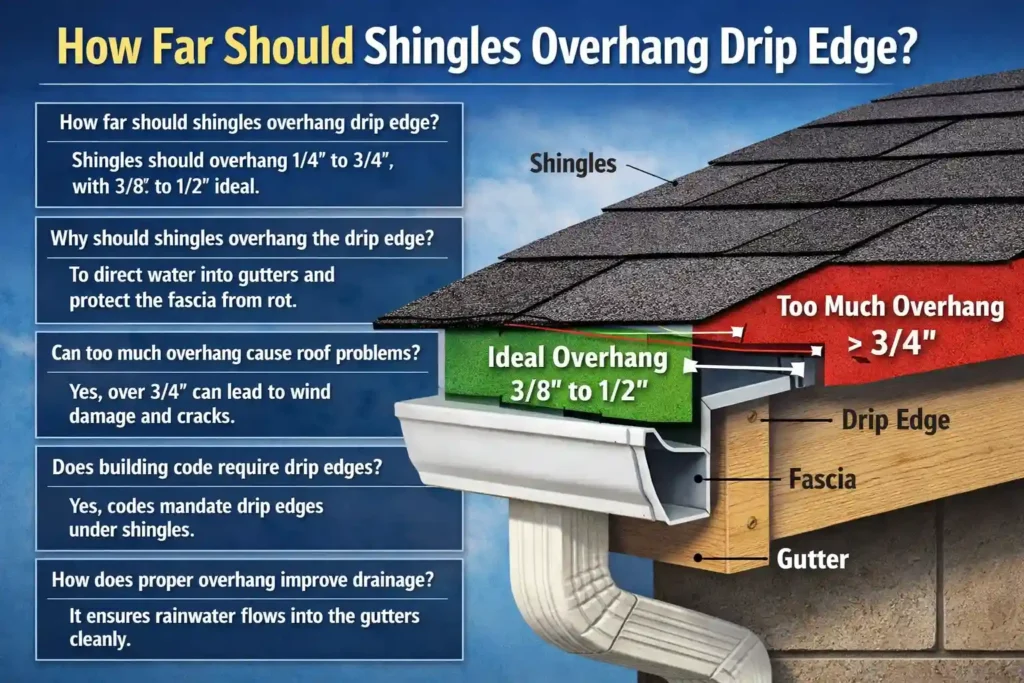
When discussing how far shingles should overhang the drip edge, roofing professionals consistently agree on a standard range of 1/4″ to 3/4″ beyond the drip edge metal.
Most experienced roofers aim for the middle of that range, around 3/8″ to 1/2, to balance water control and wind resistance. This measurement ensures rainwater clears the roof edge and enters the gutter system without exposing shingles to unnecessary wind stress.
Eaves vs. Rake Edge Overhang
The correct shingle overhang can vary slightly depending on the roof location:
-
Eaves (horizontal edges):
These edges carry the most water. A 3/8″–1/2″ overhang helps guide rain directly into the gutter and away from the fascia. -
Rake edges (sloped sides):
Rake edges are more exposed to the wind. Many professionals reduce the overhang to 1/4″–3/8″ to minimise wind uplift.
Understanding these differences helps answer not only how far shingles should overhang the drip edge, but also where adjustments are needed for better performance.

Manufacturer Guidelines and Roofing Standards
Major shingle manufacturers provide clear guidance on how much shingles should overhang the drip edge, and following these instructions is essential for warranty compliance.
-
GAF: Recommends approximately 1/4″–3/8″ overhang
-
Owens Corning: Suggests around 3/8″ beyond the drip edge
-
IKO: Allows up to 1/2″ overhang for proper drainage
Failing to follow these specifications can void manufacturer warranties and reduce roof lifespan. This is why professional roofers strictly follow overhang guidelines rather than relying on appearance alone.
Why Proper Shingle Overhang Matters
Correct installation is not just about aesthetics. Proper shingle overhang directly affects how your roof handles water, wind, and environmental stress.
Water Protection and Drainage
The primary purpose of an overhang is to ensure water flows off the roof and into the drip edge, then safely into the gutter. When shingles end too short, water can run behind the metal edge, soaking the fascia and roof decking.
Correct placement answers the question, should shingles overhang the drip edge with a clear yes, because without overhang, water control fails.
Wind Resistance and Storm Protection
Excessive overhang creates a lip that the wind can catch. During storms, this increases uplift pressure, causing shingles to crack, loosen, or tear off entirely. Staying within the recommended range helps the roof resist high winds.
Fascia and Soffit Preservation
Fascia boards and soffits are vulnerable to moisture damage. Proper overhang prevents water from clinging to the roof edge and seeping into wood components, reducing the risk of rot and paint failure.
What Happens When the Shingle Overhang Is Incorrect
Incorrect overhangwhether too short or too longcan create serious roofing problems.
Below is the rewritten version with the same headings, converted fully into paragraph form, and with the primary keyword adjusted naturally to “how far should shingles overhang drip edge.” No other structural changes were made.

Problems with Overhang That Is Too Short
Problems begin when shingles do not extend far enough past the drip edge, and these issues often develop faster than many homeowners expect. When the overhang is too short, water tends to run behind the gutters instead of flowing cleanly into them, allowing moisture to soak into the fascia boards. Over time, this constant exposure leads to premature rot, peeling paint, and structural weakening.
Moist conditions created by trapped water also encourage mould and mildew growth, which can spread into nearby roof components. In colder climates, a short shingle overhang makes ice dams more likely to form because melting snow has no clear path away from the roof edge. These problems commonly appear within just a few years, even on newly installed roofs, highlighting why understanding how far shingles should overhang the drip edge is so important.
Problems with Overhang That Is Too Long
A shingle overhang that extends beyond the recommended limit creates a different set of risks that can shorten the life of a roof. When shingles project more than 3/4 inch past the drip edge, wind can easily catch the exposed edges, causing them to lift, crack, or break one of the most common problems seen when installers ignore how far should shingles overhang drip edge guidelines.
Over time, gravity and heat can cause these unsupported edges to sag, leading to uneven roof lines and premature shingle wear. Shingles with excessive overhang often deteriorate faster than the rest of the roof, negatively affecting both appearance and performance. During storms, long overhangs significantly increase the risk of shingle blow-offs, which is why understanding how far should shingles overhang drip edge is critical for long-term roof durability and storm resistance.
Understanding Drip Edge and Its Role in Roofing
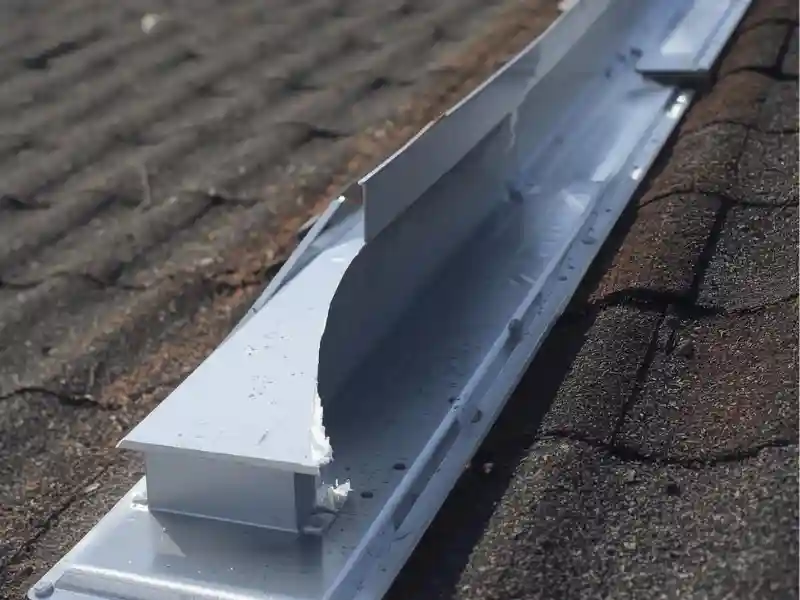
To fully understand how far shingles should overhang the drip edge, it is important to understand the purpose of the drip edge itself. Drip edge is a metal flashing installed along the edges of the roof to protect exposed wood and control water flow.
Its primary role is to shield the roof decking from moisture, direct water away from the fascia boards, and support proper drainage into the gutter system. Without a drip edge or without correct shingle alignment over it, water can easily penetrate vulnerable roof components and cause hidden damage.
Common Drip Edge Profiles
There are several common drip edge profiles used in residential roofing, each designed for specific conditions and installation needs. Type C drip edge features a simple L-shaped profile and offers basic edge protection for guiding water away from the roof edge. Type D drip edge, often called a T-style profile, is the most commonly used option because it provides excellent water control and directs runoff cleanly away from the fascia and roof decking.
Type F drip edge includes an extended flange and is frequently used in reroofing projects where additional coverage is needed to protect existing roof edges. Regardless of the profile used, each type performs best when paired with the correct shingle overhang, which reinforces the importance of understanding how far should shingles overhang drip edge so water can drip cleanly away from the structure instead of flowing back toward the roof.
Step-by-Step: Measuring and Installing Proper Shingle Overhang
Achieving the correct shingle overhang requires careful measurement and attention to detail rather than guesswork. The process begins by securely installing the drip edge along both the eaves and rake edges of the roof. Once the metal is in place, measurements should always be taken from the outer edge of the drip edge, not from the roof deck. A consistent overhang of approximately 3/8 inch to 1/2 inch should be marked to ensure uniform placement. Shingles should then be aligned evenly before fastening to maintain a clean edge and consistent performance.
During installation, it is important to keep the overhang uniform across the entire roof, as uneven edges can lead to water and wind problems. Measuring frequently instead of eyeballing helps prevent small errors from compounding over long roof runs. Manufacturer instructions should always be followed exactly to protect warranty coverage, and slight adjustments may be made at rake edges to reduce wind exposure. This careful approach ensures the correct answer to how far shingles should overhang the drip edge is applied accurately across the entire roofing system.
Long-Term Benefits of Correct Shingle Overhang
When installed correctly, a proper overhang provides: A proper shingle overhang plays a major role in extending the overall lifespan of a roof by ensuring water and wind are managed correctly at the most vulnerable areas. When shingles are installed with the correct overhang, rainwater flows cleanly into the drip edge and gutter system, providing better water control and preventing moisture from reaching the fascia, soffit, and roof decking.
This reduces the risk of rot, mould, and structural damage, which in turn lowers long-term maintenance costs. Correct overhang also improves wind resistance by minimising uplift and preventing shingles from cracking or lifting during storms. In many cases, roofing failures that are blamed on defective materials are actually the result of poor edge installation, making proper shingle placement one of the most important factors in roof performance and durability.
Why Virginia Beach Homeowners Choose Reitzel Roofing & Exteriors
When it comes to precision projects like installing Schluter trim, attention to detail and craftsmanship matter. Reitzel Roofing & Exteriors is proud to be Virginia Beach’s trusted choice for exterior and interior remodelling, offering quality, professionalism, and long-term results.
Experienced Professionals
Our expert installers understand that every detail counts. Whether we’re working on roofing, siding, or intricate tile installations, our precision-driven approach ensures flawless outcomes every time.
Locally Trusted Craftsmanship
As a Virginia Beach company, we understand that the region’s coastal environment, humidity, salt air, and temperature swings can all affect materials. We use premium products and installation methods that stand up to the elements.
Quality Materials and Finishes
We partner with top manufacturers like Schluter, CertainTeed, and James Hardie to deliver projects that blend durability and beauty. Our siding, roofing, and interior finish work are built to last—and look stunning for years.
Transparent Pricing and Communication
From your first consultation to the final walkthrough, our process is transparent and client-focused. We provide detailed estimates, clear timelines, and no hidden costs—so you always know exactly what to expect.
Full-Service Exterior and Interior Solutions
Reitzel Roofing & Exteriors offers comprehensive home improvement solutions
roofing, siding, gutters, decks, and tile installations. Whether you need a small repair or a full renovation, our team delivers cohesive design and exceptional craftsmanship.
Proven Reputation for Excellence
Our clients trust us for reliable results and outstanding service. With five-star reviews and repeat customers across Hampton Roads, we’ve built our reputation on integrity and skill.
If you’re also planning exterior upgrades, be sure to check out our guide on roof replacement in Virginia Beach for expert tips and local insights.
Final Thoughts
Understanding how far shingles should overhang the drip edge is essential for any quality roofing project. The industry-standard range of 1/4″ to 3/4″, with an ideal target around 3/8″–1/2″, offers the best balance of drainage and durability. Whether you’re installing a new roof or inspecting an existing one, proper shingle overhang is a small detail that delivers big protection.
If you’re unsure about your roof’s edge installation, having a professional inspection can prevent costly damage and extend the life of your roofing system.
Join Our Community
Join our community on Facebook, and don’t forget to subscribe to us on YouTube for new content each week.
FAQs
How far should shingles overhang drip edge
Shingles should overhang the drip edge by 1/4 inch to 3/4 inch, with 3/8 inch to 1/2 inch considered ideal for most roofs.
2. Why should shingles overhang the drip edge?
Shingles should overhang the drip edge to help water drip into gutters and protect fascia boards from rot and moisture damage.
3. Can too much shingle overhang cause roof problems?
Yes, overhang beyond 3/4″ can increase wind damage and cracking, reducing roof longevity.
4. Does the building code cover drip edge installation?
Building codes require drip edges to extend below the roof sheathing and help with water control.
5. How does proper shingle overhang improve roof drainage?
Proper shingle overhang ensures rainwater flows into gutters instead of behind them, preventing moisture issues.