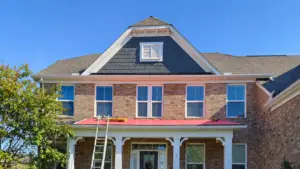
The siding is brand-new. The color is fresh. The house looks completely different from the street.
Then you look closer.
The window trim is peeling. One corner board feels soft near the bottom. The fascia still has old water stains. Caulk around the doors is cracking, and a piece of aging wood trim is now sitting directly beside thousands of dollars’ worth of new siding.
Suddenly, the exterior does not feel quite as “new” as you thought.
This is why siding trim replacement Virginia homeowners consider should be part of the conversation before a siding project begins, not after the installation crew has packed up.
Siding gets most of the attention because it covers the largest visible part of the exterior. But the smaller components around it often protect the places where water is most likely to find an opening: windows, doors, corners, roof edges, penetrations, and material transitions.
Here in Virginia Beach, those details matter. Humidity, heavy rain, strong wind, intense summer sun, and coastal weather continue testing exterior materials long after installation.
Before you keep old trim beside new siding, here is what deserves a closer look.
Why Old Trim Can Undermine a New Siding Project
Think of siding and trim as teammates.
Siding protects the broad wall surfaces, while trim helps finish and protect edges, corners, openings, and transitions.
One cannot completely compensate for problems with the other.
You could install high-quality siding across an entire house, but if deteriorated window trim remains next to it, water may still find a vulnerable area. If a corner board is already rotting near the ground, new siding does not magically stop that deterioration. And if fascia above the wall has been repeatedly exposed to overflowing gutters, replacing the siding below may solve the wrong problem.
For siding trim replacement Virginia homeowners are planning, the goal should be to determine which existing components are still healthy enough to remain and which ones would undermine the finished project.
That does not mean replacing every piece of trim automatically.
It means inspecting it before deciding.
What Counts as Exterior Trim?
When homeowners hear “trim,” they often picture the decorative border around windows.
Exterior trim is much broader than that.
Depending on the home, it can include window and door casing, corner boards or corner posts, fascia, rake trim, frieze boards, soffit transitions, decorative bands, trim around utility penetrations, garage-door surrounds, porch details, and other finishing materials.
Some pieces are primarily visual.
Others play an important role in helping exterior assemblies manage water.
That distinction matters.
A faded decorative board may simply need refinishing.
A soft window surrounded next to a history of leaks deserves a very different response.
Before siding goes up, a contractor should look at what is being covered, what remains exposed, and how old and new materials will connect.
Fresh Siding Can Make Old Trim Problems More Obvious
There is also a simple aesthetic problem.
The new siding has crisp lines and a clean color.
Older trim may have faded paint, repaired cracks, weathering, small dents, mismatched sealant, and years of sun exposure.
Those imperfections that barely caught your eye before can suddenly stand out.
Imagine installing new coastal blue siding and leaving twenty-year-old white window trim in place. Once the walls look fresh, every chipped corner and peeling section becomes more noticeable.
This is one reason siding trim replacement Virginia projects should be planned visually as well as technically.
Sometimes the existing trim is structurally sound and can simply be cleaned or repainted.
Other times, replacing it alongside the siding creates a much more finished appearance and avoids paying for separate trim work later.
Soft Window Trim Is a Warning Sign, Not a Cosmetic Detail
Windows deserve special attention during siding replacement because they create openings through the exterior wall.
Look closely at the lower corners of window trim.
Is the material soft?
Is paint bubbling?
Are there dark stains?
Has one corner been repeatedly caulked?
Does the trim appear swollen?
These can be signs that moisture has affected the material.
The visible damage may be limited to the trim, but it may also point to flashing or water-management problems behind the exterior.
Simply installing new siding around deteriorated window trim does not address the source.
For siding trim replacement Virginia homeowners should ask whether the contractor has evaluated the window perimeter before the new siding hides surrounding details.
The best time to discover a problem behind old cladding is while the exterior is already being opened up.
New Siding Should Not Hide Old Moisture Damage
One of the biggest opportunities during siding replacement is access.
Once the old siding is removed, parts of the wall assembly that may not have been visible for years can finally be observed.
That can reveal deteriorated sheathing, water staining, old insect damage, failed flashing, or previous repairs.
Not every discoloration means the wall is structurally compromised.
But suspicious areas deserve evaluation before they disappear behind new material.
Installing siding over a known moisture problem is like painting over a ceiling stain while the roof is still leaking.
The appearance changes.
The problem does not.
A quality siding project should give the contractor an opportunity to correct identifiable concerns within the project scope rather than preserve them beneath a beautiful new exterior.
Window and Door Flashing Deserves Attention Too
Trim is not the only component around an opening.
Flashing is another critical part of the water-management strategy.
A window can have beautiful new trim while still suffering from poor flashing behind it. Likewise, installing a new siding system around an old opening requires careful integration so water moving behind the cladding is directed appropriately.
This is why siding trim replacement Virginia homeowners plan should not become a purely decorative exercise.
Ask your contractor what happens around existing windows and doors.
Will the trim stay?
Will it be removed?
How will the new siding terminate against it?
Are there visible signs of old leakage?
How will flashing concerns be handled if they are discovered?
Those questions matter more than choosing whether the trim should be bright white or cream.
Corner Boards Take More Abuse Than You Think
The outside corners of your home are exposed.
Wind, rain, landscaping, lawn equipment, sunlight, and splashback can all affect the materials there.
Wood corner boards may deteriorate near the bottom if they have been repeatedly exposed to moisture. Vinyl corner posts can crack or become damaged. Other trim materials have their own maintenance concerns.
When siding is replaced, corner details should be inspected rather than automatically reused because they happen to still be attached.
A cracked or deteriorated corner beside new siding can become both an appearance problem and a maintenance issue.
Corners also help define the entire visual structure of the home.
Clean, properly proportioned trim can make even relatively simple siding look more intentional.
Do Not Forget the Fascia Above Your New Siding
Homeowners often focus on the walls and forget to look upward.
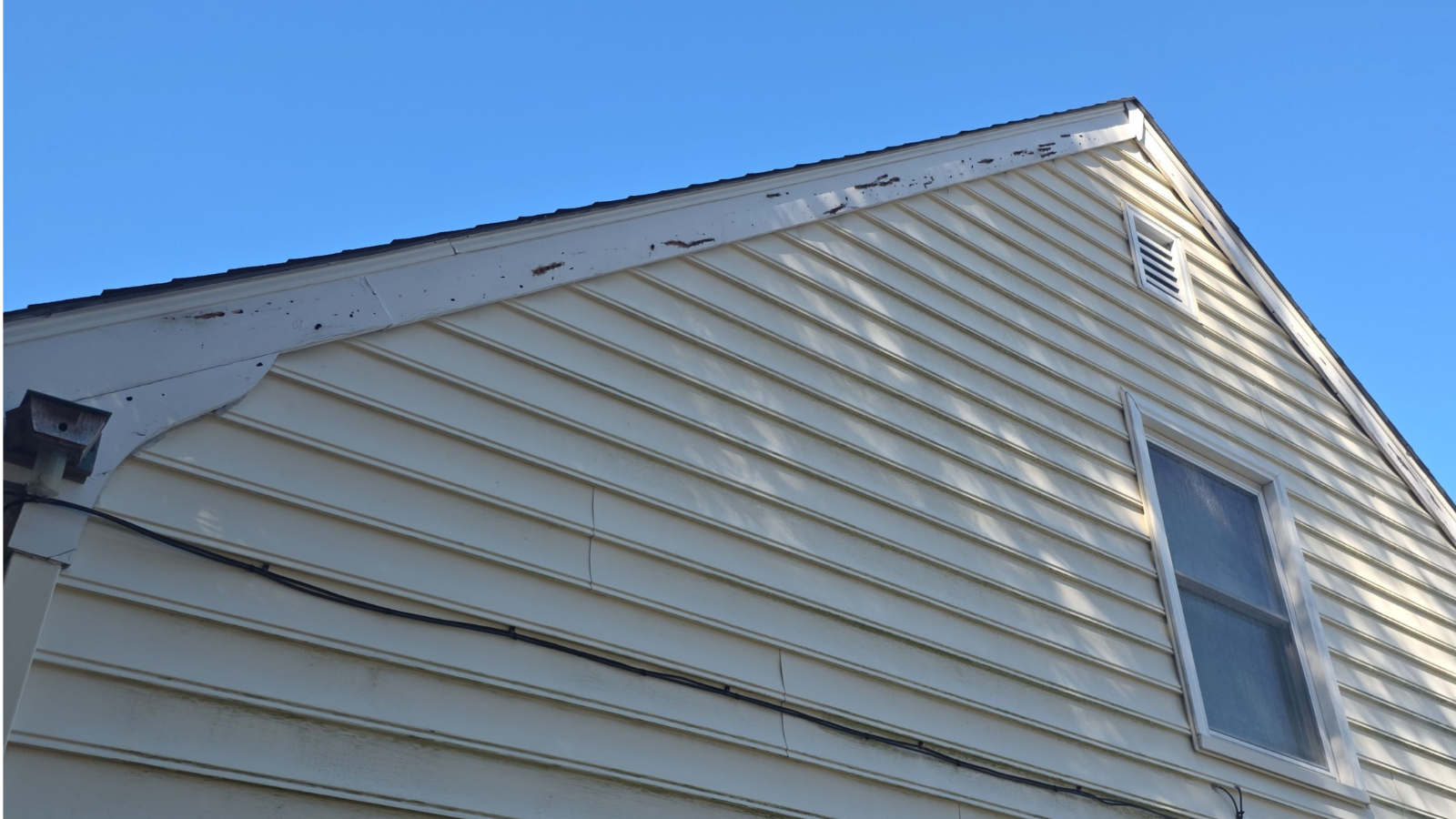
Fascia runs along roof edges and commonly sits behind or near the gutters. If it is deteriorated because of past gutter overflow, roof-edge problems, or long-term weather exposure, fresh siding below it will not correct that damage.
Look for peeling paint, soft material, staining, sagging gutters, exposed wood, or sections that look significantly worse than the walls below.
Sometimes the fascia simply needs maintenance.
Sometimes deterioration points toward a drainage or roof-edge concern that should be investigated.
For siding trim replacement Virginia Beach-area homes need, looking up is just as important as looking at the walls.
Your exterior works from the roof down.
Soffits Are Part of the Same Exterior Picture
The soffit sits underneath the roof overhang.
Depending on the home, it may also contain ventilation openings that contribute to attic airflow.
Damaged or deteriorated soffit can make a brand-new siding project look incomplete.
More importantly, staining or deterioration may indicate something occurring above or nearby.
Was a gutter overflowing?
Did water enter at the roof edge?
Is there an old animal-entry point?
Has moisture affected the material?
Replacing siding without checking soffits and fascia means overlooking two components sitting directly above the new installation.
Virginia’s home-inspection standards reflect this broader exterior view. Licensed home inspectors are expected to evaluate readily accessible wall covering, flashing and trim, as well as eaves, soffits, and fascias where accessible from ground level.
That is a useful reminder for homeowners: these components belong in the same exterior conversation.
Old Caulk Is Not New Flashing
One of the easiest ways to make an exterior look “repaired” is to add fresh caulk.
Sealant absolutely has appropriate uses.
But layers of caulk should not become the main thing keeping your home dry.
If trim around a window or door has been repeatedly sealed, find out why before surrounding it with new siding.
The visible crack may not be the actual water-entry point.
Moisture could be coming from higher on the wall, a flashing detail, roof runoff, or another transition.
Siding trim replacement Virginia homeowners invest in should correct deteriorated components and obvious water-management concerns rather than simply give old problems a cleaner border.
Material Choice Matters When Replacing Trim
Not every exterior trim product behaves the same way.
Depending on the home and design, contractors may use wood, PVC products, fiber cement trim, composite materials, vinyl components, aluminum-wrapped details, or other exterior systems.
Each has benefits, limitations, installation requirements, and maintenance expectations.
Homeowners sometimes ask for a “maintenance-free” solution.
Be careful with that phrase.
Exterior components still need periodic inspection even if the material itself does not require regular painting.
Sealant can age.
Flashing can be damaged.
Fasteners can loosen.
Storm debris can cause impact damage.
The goal is not finding a material you never have to look at again.
It is choosing an appropriate product, installing it correctly, and understanding what maintenance it needs.
New and Old Materials Need to Work Together
Suppose your old window trim is perfectly sound.
Does it automatically need to come off?
No.
If the trim is in good condition, works properly with the new siding system, and still fits the desired exterior design, keeping it may be completely reasonable.
The key is compatibility.
How will the siding terminate against it?
Will the thicknesses align?
Does the trim provide enough room for the new profile?
Can the required clearances and flashing details be maintained?
This is where siding trim replacement Virginia planning should become specific to the actual house.
The correct answer may differ from one elevation to another.
When Keeping Existing Trim Makes Sense
Existing trim may be worth keeping when it is structurally sound, free from moisture damage, properly integrated, visually compatible with the new siding, and in good enough condition to last alongside the new material.
Historic or distinctive architectural trim may also be worth preserving when possible.
Replacement should not become demolition simply for the sake of making everything new.
If the existing material is performing well, homeowners may prefer to repaint or refinish it instead.
A good contractor should be comfortable telling you which components can reasonably remain.
When Replacement Is the Smarter Move
Replacement becomes more attractive when trim is rotted, cracked, severely weathered, poorly repaired, repeatedly leaking, incompatible with the new siding, or nearing the end of its useful life.
Think about timing too.
If the siding is expected to remain for decades while the trim looks like it may need major work in two years, completing both projects together could avoid disturbing the finished exterior later.
For siding trim replacement Virginia homeowners should compare the cost of addressing the trim now against the inconvenience and labor involved in returning after the siding installation is complete.
Doing everything at once is not always necessary.
But sometimes it is clearly more practical.
New Siding, Old Trim: What Should Stay and What Should Go?
| Exterior Component | Keeping It May Make Sense When | Replacement May Make Sense When |
| Window trim | Solid, dry, properly flashed and visually compatible | Soft, rotted, swollen, cracked or repeatedly patched |
| Door trim | Well-sealed, sound and properly integrated | Deteriorated or showing signs of recurring moisture |
| Corner boards/posts | Straight, solid and compatible with new siding | Cracked, rotted, damaged or poorly fitted |
| Fascia | Sound with no significant moisture damage | Soft, peeling, stained or affected by gutter problems |
| Soffit | Intact and ventilation openings remain functional | Damaged, deteriorated, stained or improperly vented |
| Decorative trim | Structurally sound and fits new exterior design | Badly weathered or incompatible with updated style |
| Flashing | Properly installed and still serviceable | Damaged, missing, corroded or poorly integrated |
| Sealant joints | Correctly placed and still flexible | Split, pulling away or repeatedly patched |
| Utility trim blocks | Secure and properly sealed | Cracked, loose or poorly fitted around penetrations |
The table shows why siding trim replacement Virginia homeowners consider should be decided component by component.
“Old” does not automatically mean “bad.”
“New” does not automatically mean “necessary.”
Condition should drive the decision.
The Permit Process Is Worth Knowing Before Work Begins
Virginia Beach homeowners should also understand the local requirements surrounding siding work.
The City of Virginia Beach currently lists roofing and siding replacements among residential alterations requiring building permits. Its residential inspection schedule also lists siding, EIFS, roofing, and fences for a final building inspection.
The city notes that residential alteration applications involving siding require information such as the contract value when a contractor obtains the permit, or the approximate cost of materials when the homeowner is obtaining it.
That does not mean every tiny trim maintenance project automatically follows the same permitting process as full siding replacement.
Project scope matters.
But when you are planning a complete siding replacement, ask the contractor about permitting before the project begins.
Why the Final Inspection Matters
A siding project may look complete to a homeowner because the walls look finished.
Local inspection requirements create another checkpoint.
Virginia Beach’s published schedule identifies a final building inspection for siding work.
That is another reason exterior work should be treated as construction rather than simply decoration.
For a larger siding trim replacement Virginia project, keep the permit information, contract, material documentation, warranties, and inspection records together after completion.
Those records can be useful later if you sell the home, need warranty service, or complete another exterior renovation.
Your Exterior Should Be Evaluated as a System
One of the biggest mistakes in home improvement is treating every component independently.
A siding contractor looks only at siding.
A gutter problem gets treated only as a gutter problem.
A window leak gets blamed only on the window.
Real homes are more complicated.
Water overflowing from a gutter can deteriorate fascia and stain siding.
Failed roof-to-wall flashing can create damage that appears around a window.
Poor drainage near the bottom of a wall can contribute to deterioration around lower trim.
That is why Reitzel Roofing & Exteriors looks at the relationship between the components.
If water is causing the problem, we want to know where it started, not simply where the damage finally became visible.
Do Not Make Color the Only Trim Decision
Trim color dramatically affects curb appeal.
White trim creates contrast.
Matching trim can make an exterior feel cleaner and more contemporary.
Dark trim can emphasize windows and architectural lines.
But color should come after condition.
There is little value in spending time choosing the perfect trim color for material that is already deteriorating.
Once you know which trim stays and which needs replacement, then you can look at proportions, colors, siding profiles, shutters, doors, gutters, roofing, and other exterior details together.
The strongest exteriors look coordinated rather than assembled one project at a time.
Ask These Questions Before Signing a Siding Contract
Before work begins, ask whether all existing trim has been inspected.
Find out what happens if deteriorated sheathing or hidden moisture is found after old siding comes off.
Ask which trim is included in the estimate and which pieces are excluded.
Ask whether window and door flashing will be evaluated where work exposes those areas.
Ask how soffit, fascia, corner boards, and utility penetrations fit into the scope.
And ask whether trim repair or replacement pricing can be documented clearly before additional work begins.
A detailed scope protects everyone.
It also makes comparing siding estimates much easier because two contractors may be proposing very different amounts of work even when the final siding square footage is identical.
Why Reitzel Roofing & Exteriors Looks Beyond the New Siding
At Reitzel Roofing & Exteriors, we understand why siding replacement is exciting.
Few exterior projects can change the appearance of a house so dramatically.
But a transformation should make sense up close too.
For siding trim replacement Virginia homeowners are considering, we look at the surrounding exterior rather than focusing only on the biggest wall surfaces.
Window trim matters.
Door surrounds matter.
Corners matter.
Soffits and fascia matter.
Flashing and drainage matter.
If something is healthy enough to remain, homeowners should understand why.
If a deteriorated component is likely to compromise the new exterior, they should know before thousands of dollars of new siding are installed around it.
The goal is not replacing everything.
The goal is avoiding the expensive mistake of replacing the wrong things.
Final Thoughts: New Siding Deserves a Strong Foundation Around It
New siding can completely transform a Virginia Beach home.
But the best transformations hold up when you walk closer.
The window trim should not be crumbling beside beautiful new panels.
The corner boards should not already be soft.
The fascia should not be quietly deteriorating above a freshly renovated wall.
And an old moisture problem should never be hidden simply because new siding makes the house look better from the street.
That is why siding trim replacement Virginia homeowners consider deserves a place in the project discussion from day one.
Not every old component needs to go.
Not every piece of trim needs to be replaced simply because it is no longer new.
But anything damaged, incompatible, poorly integrated, or likely to create problems for the new siding deserves an honest evaluation.
We look beyond the fresh siding to the windows, corners, trim, soffit, fascia, flashing, and other details that help the exterior work as one system.
Because a siding project should not just make your Virginia Beach home look new.
It should leave the details around it ready for the years ahead too.
FAQs
1: Do I have to replace all my trim when I replace my siding?
A: No. Existing trim does not automatically need replacement simply because new siding is being installed. If your window trim, door surrounds, corner boards, fascia, and other exterior components are solid, dry, properly integrated, and compatible with the new siding system, they may be able to remain. The important step is evaluating them before installation begins. For siding trim replacement Virginia homeowners should make decisions based on condition rather than age alone. A fifteen-year-old piece of well-maintained trim may still be perfectly serviceable, while a much newer board exposed to repeated moisture could already require replacement. Ask your contractor to clearly identify what will stay, what should be repaired, and what should be replaced before the project begins.
2: How can I tell if exterior trim has water damage?
A: Common warning signs include peeling or bubbling paint, swelling, softness, crumbling wood, dark staining, open joints, repeated caulking, and deterioration concentrated around lower corners or horizontal surfaces. Window and door trim deserve special attention because these openings involve several water-management details. Fascia staining may also indicate gutter or roof-edge problems rather than a problem with the trim alone. Do not assume the visible deterioration represents the entire extent of the issue. If the old siding is being removed, the contractor may have an opportunity to see whether water has affected surrounding sheathing or other concealed materials. Identifying the source is more important than simply replacing the damaged-looking board.
3: Is it cheaper to replace the trim while the siding is already being replaced?
A: It can be, particularly when the trim would otherwise require disturbing portions of the newly installed exterior later. The exact cost depends on the material, amount of trim, accessibility, damage, flashing details, and project design. Replacing perfectly good trim simply because the siding crew is already there may not offer much value, but leaving severely deteriorated materials beside new siding may create another project sooner than expected. This is why siding trim replacement Virginia homeowner’s plan is best evaluated before finalizing the siding scope. Ask for trim work to be listed clearly in the estimate so you can compare the cost of addressing it now with the likely cost and disruption of returning later.
4: Does Virginia Beach require a permit for siding replacement?
A: Yes. The City of Virginia Beach currently identifies siding replacement among residential alterations requiring a building permit and lists siding work for a final building inspection. The requirements for a small trim repair may not necessarily be identical to a complete siding replacement, so homeowners should verify the specific scope when needed rather than assuming every exterior repair falls under the same process. If you are replacing the siding across your home, discuss permitting responsibilities with your contractor before work begins and keep the final permit and inspection records with your project documents.
5: What trim areas should I pay the most attention to before new siding goes on?
A: Start around windows and exterior doors because openings create transitions where siding, trim, flashing, and the wall assembly have to work together. Then inspect outside corners, lower trim areas, fascia behind gutters, soffits beneath roof edges, garage-door surrounds, utility penetrations, and any place where a roof meets a wall. Virginia’s home-inspection standards themselves identify wall covering, flashing and trim, doors and windows, and readily accessible eaves, soffits, and fascias as exterior components worth evaluating. For siding trim replacement Virginia homeowners should pay particular attention to any area with softness, staining, repeated patches, open joints, or a history of moisture because installing fresh siding around an unresolved problem does not make that problem disappear.