Your roof has one bad section.
Maybe a tree limb damaged the back slope. Maybe shingles around a valley are failing while the rest of the roof still looks solid. Or perhaps a newer addition has a completely different roofing history than the original part of the house.
So do you really need to replace everything?
Not always.
A partial roof replacement Virginia homeowners consider can sometimes be a smart, practical solution when damage is truly isolated and the remaining roof still has meaningful service life. But there is an important difference between replacing one damaged section because the rest of the system is healthy and replacing one section simply to postpone a full roof that is already nearing the end of its life.
That distinction matters in Virginia Beach, where coastal wind, heavy rain, summer heat, humidity, and seasonal storms can cause different roof slopes to age at different rates.
Sometimes repairing or replacing one section makes sense.
Sometimes it only delays the inevitable.
Here is how to tell the difference.
What Does “Partial Roof Replacement” Actually Mean?
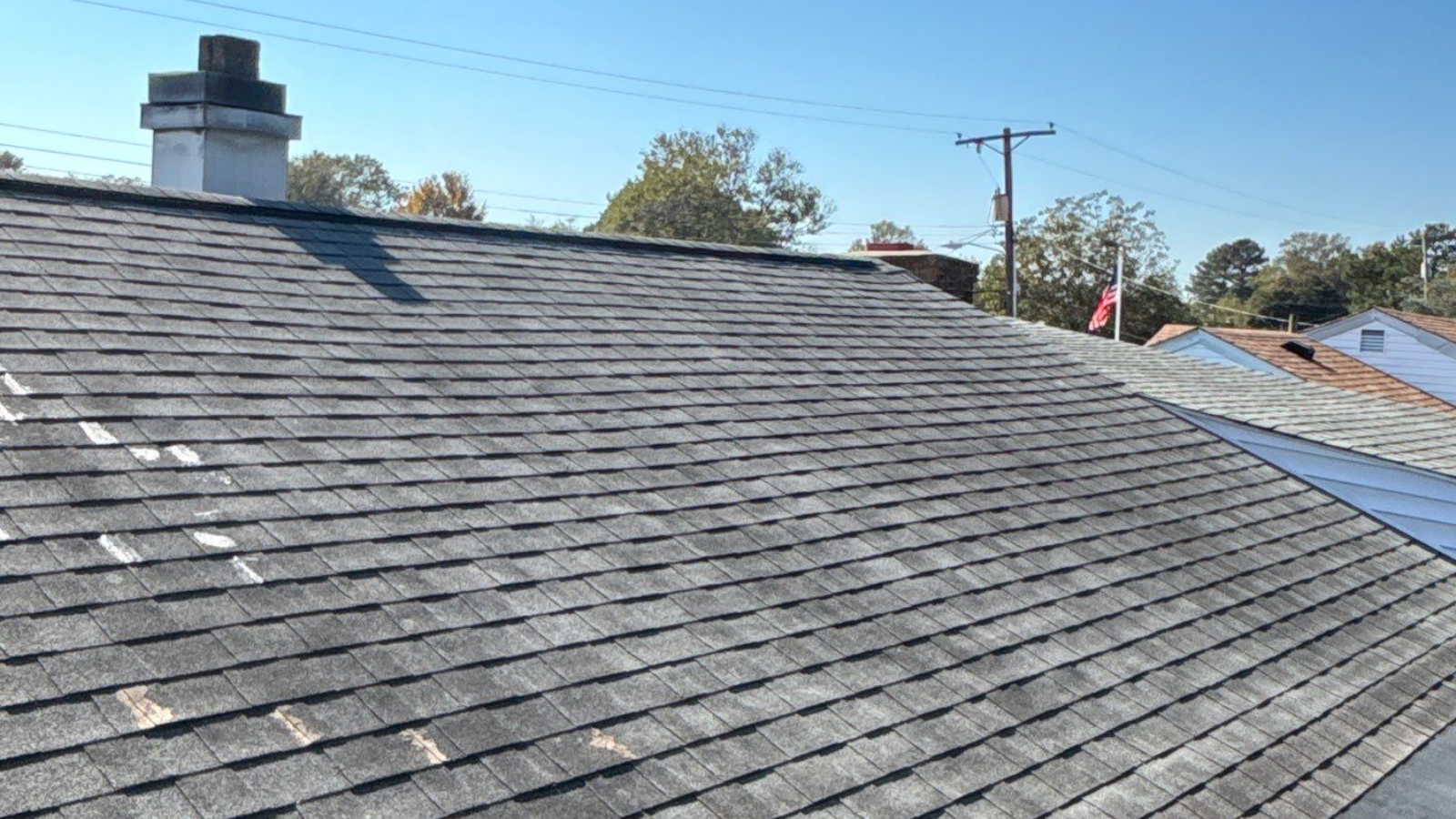
A partial roof replacement generally means removing and replacing the roofing materials on one defined portion of the roof while leaving other serviceable areas in place.
That could mean replacing one complete slope, a garage roof, a porch roof, a storm-damaged section, or another clearly separated area.
It is different from replacing a handful of shingles.
Small shingle replacement is usually considered a localized roof repair. A partial replacement involves a larger section of the roofing system, often including shingles, underlayment, flashing, and potentially damaged decking within that area.
For a partial roof replacement Virginia homeowners are considering, the most important question is not simply, “Can this section be replaced?”
It is:
“Does replacing only this section make sense for the entire roof?”
When Replacing One Section Can Make Sense
There are situations where a partial approach can be completely reasonable.
Imagine your roof is only eight years old and a large tree limb damages one slope during a storm.
The remaining shingles are performing well. The attic is dry. There are no widespread signs of deterioration. The damage has a clear cause and a clear boundary.
Replacing the damaged section may be far more sensible than removing a healthy roofing system from the rest of the home.
Another example is a house with additions built at different times.
Your main roof might be fifteen years old while a rear addition was roofed only five years ago. If the older main section reaches the point where replacement is necessary, removing perfectly serviceable roofing from the newer addition may not always be the best decision.
This is where a professional inspection becomes important.
Virginia Beach Weather Can Damage One Roof Slope More Than Another
Roofs do not always age evenly.
One side may receive stronger afternoon sun.
A north-facing slope may remain damp longer.
A rear section beneath trees may collect more debris.
One elevation may experience stronger storm winds.
That is why partial roof replacement Virginia Beach-area homeowners discuss sometimes begins with a roof that looks noticeably different from one side to another.
Storm damage can also be highly localized.
Wind may lift shingles along one slope or roof edge without affecting the opposite side. Falling branches may damage only a small section. A leak around one roof-to-wall transition can deteriorate decking nearby while the rest of the roof remains dry.
The important thing is determining whether the problem is truly isolated.
When a Partial Replacement Is Probably a Good Candidate
A partial approach becomes more attractive when several conditions line up.
The undamaged roofing should still be in reasonably good condition. The problem should have a clearly defined location. The remaining roof should not be showing widespread granule loss, cracking, curling, repeated leaks, or other signs of advanced deterioration.
It also helps when the roof has distinct sections.
A garage separated by a different roofline, for example, is much easier to treat independently than a random rectangular patch in the middle of one continuous slope.
For partial roof replacement Virginia homeowners should think in terms of roofing systems and natural stopping points rather than simply drawing a line around the damaged shingles.
Valleys, ridges, walls, hips, and changes in elevation can sometimes create logical boundaries for the work.
Storm Damage Is One of the Most Common Reasons
Localized storm damage is one of the situations where homeowners naturally ask whether the entire roof needs replacement.
The answer depends on what the storm actually did.
A few missing shingles may call for repair.
More extensive damage across one complete slope may support a larger section replacement.
Widespread damage across multiple elevations can turn the conversation toward full replacement.
Do not judge storm damage only by what you can see from the driveway.
Wind can loosen shingles without completely removing them. Flashing can be affected. Tree impact can damage the roof deck beneath the surface.
A proper inspection should determine the extent before the repair scope is decided.
What If Only One Side of the Roof Is Old?
This happens more often than homeowners expect.
Maybe an addition was built years after the original house.
Maybe storm damage led to one slope being replaced before you purchased the property.
Maybe a previous owner completed roofing work in stages.
If different sections genuinely have different installation dates, replacing the older section can make practical sense.
However, keep records.
Knowing which portion was replaced and when becomes important later when the remaining roof needs work.
Without good documentation, future homeowners or contractors may struggle to understand why two sections with similar-looking shingles have very different ages.
The Biggest Challenge: Matching the Existing Shingles
This is where partial replacement can become frustrating.
Roofing materials change.
Manufacturers discontinue colors and product lines. Shingle colors also change naturally with years of sun, weather, algae, and environmental exposure.
Even if you locate the exact same color name, brand-new shingles may look noticeably different next to ten-year-old materials.
That means partial roof replacement Virginia homeowners choose can create a visible contrast.
Some homeowners do not mind, particularly if the repaired slope is on the back of the house.
Others care greatly about curb appeal.
If your roof is highly visible from the street, ask to see the proposed replacement shingle next to the existing material before making the final decision.
Color Match and Performance Match Are Not the Same Thing
A matching color does not automatically mean the new roofing product integrates perfectly with the old system.
Shingle dimensions, profiles, thicknesses, fastening requirements, and warranty conditions can vary between products.
That is another reason a contractor should evaluate the transition rather than simply finding something that “looks close.”
The goal is to create a roofing section that performs properly while maintaining the best visual match reasonably available.
A cosmetic match matters.
A technically sound installation matters more.
Flashing Can Complicate a Partial Project
Suppose the section you want to replace meets a chimney, dormer, wall, valley, or skylight.
Now the project involves more than shingles.
Flashing has to be evaluated.
Some flashing may need to be removed or disturbed to complete the roofing work properly. The contractor needs to determine whether existing flashing remains serviceable and whether the new section can be integrated with the surrounding roof without creating a weak transition.
This is why a partial roof replacement Virginia homeowners plan should never be priced by square footage alone.
Complex transitions can make a small section technically more involved than a much larger open roof slope.
What About the Underlayment?
Once shingles are removed, the contractor also needs to consider what lies underneath.
Underlayment, roof decking, and previous repairs become visible.
If the roof has leaked for years, the damage may extend farther than expected.
A project initially planned as one small section may need to expand if deteriorated decking or hidden moisture is discovered beyond the original boundary.
That is not necessarily evidence the contractor is “upselling.”
Roofing hides a lot.
Sometimes the true scope cannot be confirmed until the covering is removed.
A professional contractor should explain beforehand how unforeseen decking or hidden damage will be handled.
Virginia Code Still Applies to Roof Repair and Reroofing Work
Partial does not mean “anything goes.”
Virginia’s current Construction Code states that materials and methods used for reroofing and roof repair must comply with the applicable roof-assembly requirements and applicable provisions of the Virginia Existing Building Code.
That matters because even a smaller roofing project still needs proper materials, flashing, fastening, underlayment, and installation methods appropriate to the work.
Virginia’s Department of Housing and Community Development confirms that the 2021 Virginia Codes became effective January 18, 2024 and remain the currently adopted statewide code edition while the next code cycle is being developed.
What About Virginia Beach Permits?
The City of Virginia Beach currently lists roofing replacement among residential alterations requiring a building permit and lists roofing work for a final building inspection.
Because that city guidance specifically says roofing replacement, homeowners considering a smaller roof repair or limited-scope project should confirm the permit requirements for their exact scope with Virginia Beach Permits & Inspections rather than assuming every repair follows the same process.
For a partial roof replacement Virginia Beach homeowners are planning, asking about permitting before work begins is much easier than trying to sort out paperwork afterward.
Partial Replacement vs. Full Replacement
| Roof Condition | Partial Replacement May Make Sense | Full Replacement May Make More Sense |
| Localized storm damage | Yes, especially when the rest is healthy | If damage is widespread across multiple slopes |
| One newer and one older roof section | Often | If both sections are already near end of life |
| Single damaged garage or addition | Often | If roofing systems are interconnected and deteriorated |
| Roof under 10 years old | Often worth evaluating | If workmanship problems are widespread |
| Roof around 20+ years old | Less attractive depending on condition | Often worth comparing long-term cost |
| Exact shingle unavailable | Possible with acceptable alternative | Better when appearance is a priority |
| Multiple active leaks | Usually less attractive | Often indicates broader deterioration |
| Significant decking damage | Depends on how localized it is | If deterioration extends across the roof |
| Repeated repairs in several areas | Less likely to be cost-effective | Full replacement may end the repair cycle |
The right choice is not determined by one number.
Age matters, but condition matters more.
When Partial Replacement Starts Becoming False Economy
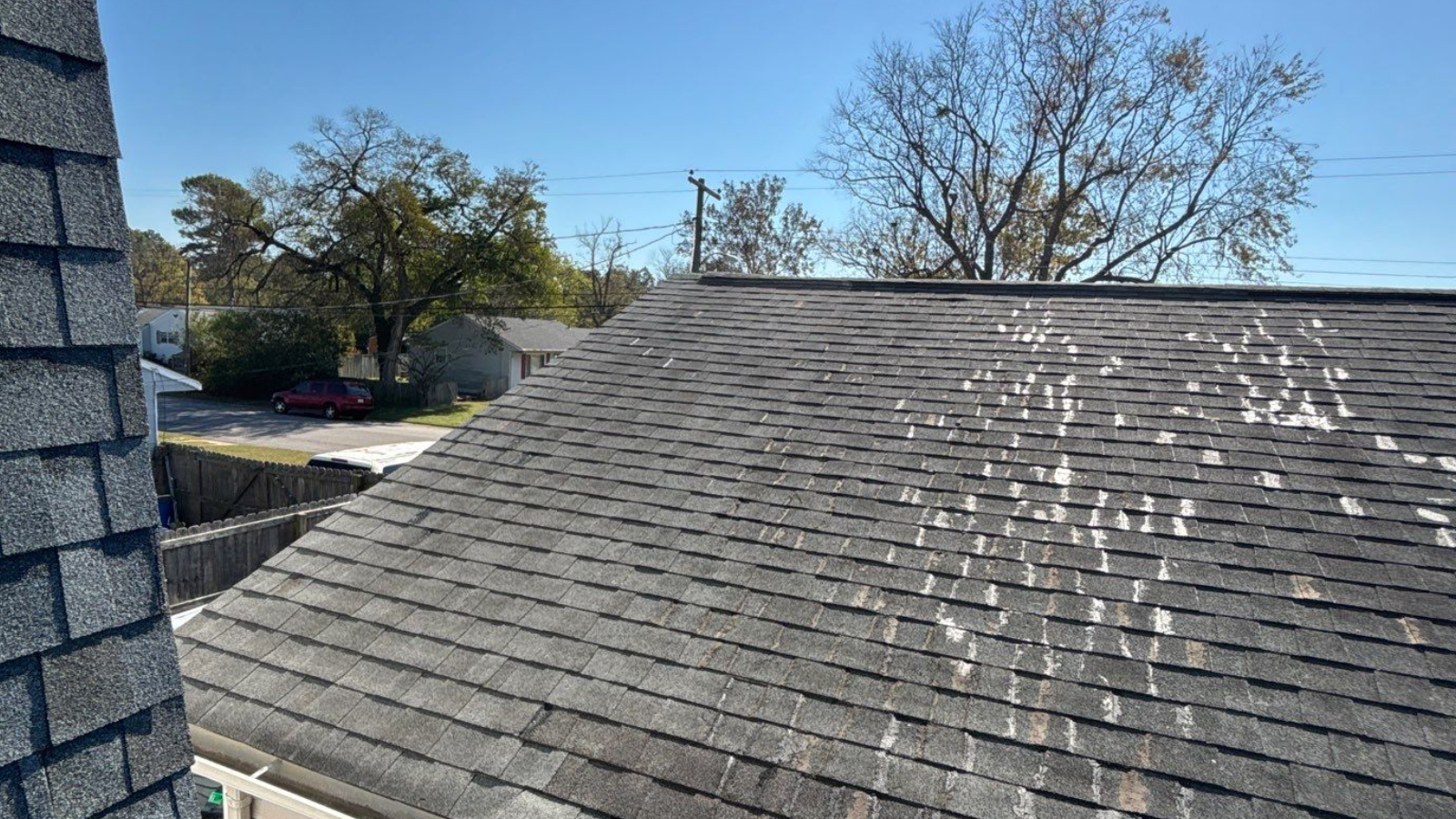
Imagine your roof is twenty-two years old.
One slope is leaking.
Technically, you might be able to replace that slope.
But the remaining roofing is also showing substantial granule loss, brittle shingles, worn flashing, and several previous repairs.
Saving part of that roof today may mean paying another mobilization, tear-off, permit-related expense where applicable, cleanup, labor, and roofing project cost in a few years when the remaining sections fail.
At that point, partial roof replacement Virginia homeowners choose simply to reduce today’s invoice may cost more over the longer term.
That does not mean every older roof requires immediate replacement.
It means the remaining service life should be part of the calculation.
Think About Cost Per Year, Not Just Today’s Price
A partial replacement will usually cost less upfront than replacing the entire roof because less material is being removed and installed.
But comparing only today’s invoices can be misleading.
Suppose the partial project costs significantly less but the rest of the roof likely needs replacement in three years.
Now you have two roofing projects.
Two periods of disruption.
Two mobilizations.
Potentially two permitting processes depending on scope.
And possibly difficulty matching roofing materials the second time.
A full replacement costs more now but resets the roofing system together.
The smartest financial choice depends on how much service life is realistically left in the roof you are saving.
What About Manufacturer Warranties?
Warranty considerations can become complicated when new and old roofing materials meet.
New shingles may carry their own manufacturer coverage, while older materials remain under a different warranty or no warranty at all.
Workmanship coverage may also apply only to the section installed by the current contractor.
Do not assume that replacing one slope somehow renews the warranty on everything else.
Ask for the warranty terms in writing.
If maintaining a particular manufacturer’s system is important, confirm product compatibility and installation requirements before work starts.
Will a Partial Roof Look Bad?
It depends.
A rear garage slope may barely be visible.
A front-facing roof section next to heavily faded shingles may be impossible to disguise.
Color differences can become especially obvious on darker or heavily weathered roofs.
There are also times when the new section initially looks noticeably different but blends better after some weather exposure.
However, homeowners should never be promised a perfect match unless the contractor can actually provide one.
A professional should set expectations before the old roofing is removed.
When Full Replacement Usually Makes More Sense
Full replacement deserves serious consideration when deterioration appears across the roofing system rather than in one isolated location.
Watch for widespread granule loss, brittle or cracking shingles, recurring leaks, repeated repairs, multiple failing flashing areas, deteriorated decking, and roof sections all approaching the same age.
If the contractor keeps fixing a new leak every season, you are no longer dealing with one defective area.
You may be dealing with a roofing system that is aging out.
This is where a good inspection becomes valuable.
You want someone to answer two separate questions:
Can this section be repaired or replaced?
And should it be?
Those are not always the same answer.
A Roof Inspection Should Come Before the Decision
Before deciding on partial roof replacement Virginia homeowners should have the complete roofing system evaluated.
That means more than staring at the leaking spot.
The contractor should consider the surrounding shingles, other roof slopes, valleys, flashing, penetrations, roof edges, gutters, accessible attic conditions, and visible signs of previous moisture.
Why?
Because repairing the obvious section while ignoring another failing area can turn today’s “affordable solution” into another service call six months later.
At Reitzel Roofing & Exteriors, we believe homeowners should understand the condition of the whole roof before deciding how much of it to replace.
Questions to Ask Your Contractor
Ask how much remaining life the unreplaced roof appears to have.
Ask whether the new shingles can be matched reasonably well.
Ask where the new section will transition into the existing roofing.
Ask whether flashing needs to be replaced.
Ask what happens if deteriorated decking is discovered.
Ask how warranty coverage works.
Ask whether the scope requires a permit.
And ask the question homeowners sometimes forget:
“If this were your house, would you put money into one section or replace the whole thing?”
A good contractor should be able to explain the reasoning behind the recommendation.
Why Reitzel Roofing & Exteriors Focuses on the Long-Term Answer
We understand why homeowners ask about partial replacement.
Nobody wants to replace more roofing than necessary.
If one section is damaged and the rest of the roof has plenty of service life left, there may be no good reason to tear everything off.
But we also do not want homeowners investing repeatedly in an aging roof when those repair dollars could have been put toward a long-term solution.
For partial roof replacement Virginia homeowners are considering, Reitzel Roofing & Exteriors looks at the extent of damage, age of surrounding materials, roof layout, flashing, decking conditions, repair history, material availability, and remaining roof life before recommending a path forward.
The goal is not the biggest project.
It is the right project.
Final Thoughts: Sometimes Less Roof Is the Right Roof to Replace
You should not have to replace an entire roofing system simply because one section has a problem.
But you also should not keep investing in pieces of a roof that is telling you, section by section, that its useful life is coming to an end.
The difference comes down to condition.
If storm damage is isolated, the remaining shingles are healthy, and there is a natural transition between roof sections, a smaller project may be exactly what your home needs.
If deterioration is widespread, materials are difficult to match, leaks keep returning, or the unreplaced sections are already approaching replacement age, doing the entire roof may offer better value and fewer headaches.
Your roof does not care whether the solution is called a repair, partial replacement, or full replacement.
It only cares whether the problem was actually solved.
And that is the standard your roofing decision should meet.
FAQs
1: Can I replace only one side of my roof in Virginia Beach?
A: Yes, replacing one complete slope can sometimes be practical when the damage is isolated and the remaining roof is still in good condition. Storm damage, tree impact, different installation dates, or a separately constructed addition are common reasons one roof section may need work before another. However, a partial roof replacement Virginia homeowner considers should begin with an inspection of the whole system so the condition of the remaining slopes is understood. If the rest of the roof is already showing widespread aging, investing in only one side may simply postpone a larger project for a short period.
2: How much older can the rest of the roof be before partial replacement stops making sense?
A: There is no universal age cutoff because two roofs of the same age can have very different conditions. Installation quality, shingle type, ventilation, sun exposure, storm history, tree coverage, maintenance, and previous repairs all influence remaining service life. A roof approaching a later stage of its expected life with widespread wear deserves a careful cost comparison before one section is replaced. If the remaining roofing may need replacement soon, completing the entire roof at once can sometimes be more economical than paying for two separate projects.
3: Can new shingles be matched perfectly to my existing roof?
A: Sometimes a very close match is available, but homeowners should not count on perfection. Manufacturers change product lines and colors, while existing shingles fade and weather over time. Even the exact same color name can look different when brand-new material is installed beside shingles that have spent years in the Virginia Beach sun and rain. Your roofer should discuss availability and appearance before work begins. If the repair is on a highly visible front slope and appearance matters greatly, the difficulty of matching the existing roofing may influence whether a larger replacement makes sense.
4: Does a partial roof project need a Virginia Beach permit?
A: The City of Virginia Beach currently states that roofing replacement is a residential alteration requiring a building permit and lists a final inspection for roofing work. The city’s published page does not, by itself, establish that every small repair has identical permitting requirements, so homeowners should verify their specific project scope with Virginia Beach Permits & Inspections. Your roofing contractor should also be able to explain how permitting applies to the proposed work. It is always better to clarify that before construction begins than make assumptions based solely on the size of the project.
5: How do I know whether partial replacement or a full new roof is the better investment?
A: Start with the condition of the roofing you would be leaving behind. If the remaining roof is performing well, has meaningful life left, and the damage is clearly isolated, replacing one section can be a sensible way to avoid unnecessary work. If the rest of the roof has multiple leaks, brittle shingles, widespread granule loss, repeated patching, failing flashing, or similar aging throughout, partial roof replacement Virginia homeowners choose may only delay a full replacement while adding another round of labor and project costs later. A trustworthy roofing assessment should show you both options and explain why one offers better long-term value for your particular home.